
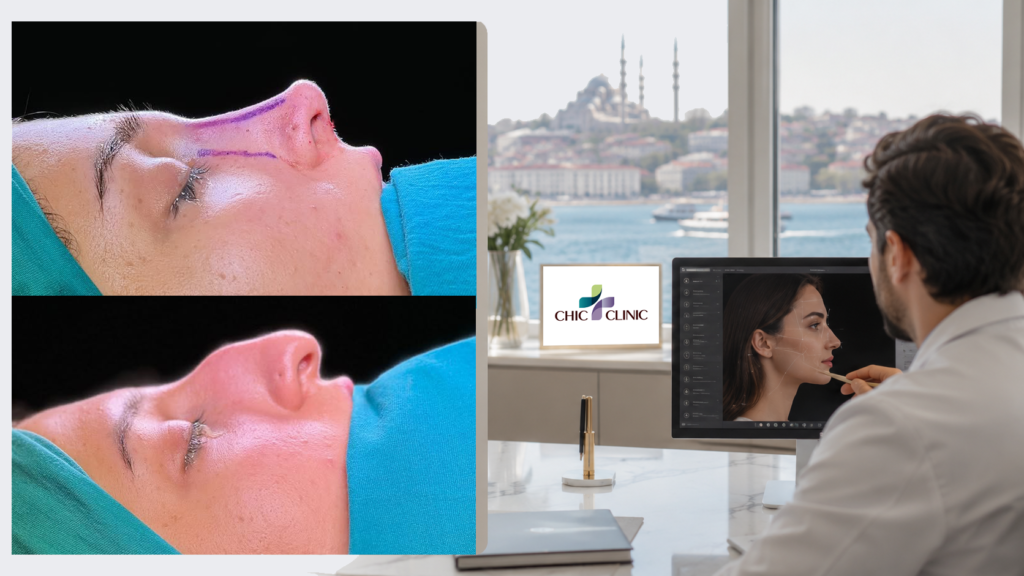
One photo shows a smoother bridge. Another shows a lifted tip. A third looks subtle enough that you cannot immediately tell surgery was done at all. That is why rhinoplasty before after examples matter so much. They help you move past vague promises and look at the kind of change a surgeon can actually deliver on a real face.
For international patients, this step is even more important. When you are planning surgery abroad, you are not only choosing a procedure. You are choosing a surgeon, a treatment plan, a travel timeline, and a support team that can guide you from first consultation to recovery. Before-and-after photos are often where confidence begins, but only if you know how to read them properly.
What rhinoplasty before after examples really show
A good rhinoplasty photo set should show more than a prettier nose. It should show balance. The nose has to work with the chin, lips, cheeks, and overall facial proportions. If a before-and-after example looks dramatic but the nose seems disconnected from the rest of the face, that is not always a sign of a better result.
The strongest examples usually share one quality – they look believable. The nose may appear straighter, more refined, or more proportionate, but the person still looks like themselves. Most patients do not want a nose that looks copied from someone else. They want a result that fits their own anatomy, ethnicity, skin thickness, and facial structure.
This is where expectations need to stay grounded. A patient with a wide nasal tip, thick skin, or a major deviation may still get an excellent result, but that result will not look the same as someone with thin skin and a small structural adjustment. Before-and-after photos are useful when they show what is possible within real anatomical limits.
For a complete overview of the procedure, surgical techniques, and treatment process, visit our Rhinoplasty in Istanbul page.
How to judge before-and-after photos the smart way
Many patients look at rhinoplasty galleries too quickly. They focus on whether the after photo looks attractive and miss the details that matter more. Lighting, angle, makeup, facial expression, and even camera distance can affect what you think you are seeing.
Look first for consistency. The best examples use similar angles, similar lighting, and a neutral facial expression in both images. Front view, side profile, and three-quarter view should all be included. One side-profile image alone is not enough to judge a result.
Then look at the functional and structural improvements. Is the bridge straighter? Has a drooping tip been lifted in a natural way? Does the nose look more centered on the face? If the patient had a bump removed, does the new profile still look smooth and supported rather than over-reduced? A very small nose is not automatically a better nose.
Timing also matters. Early after photos can be misleading because swelling can remain for months, especially in the tip. A result that looks slightly full at three months may refine beautifully later. On the other hand, a photo taken too soon should not be presented as a finished outcome.
Common types of rhinoplasty before after examples
Not all rhinoplasty transformations aim for the same kind of improvement. Some patients want cosmetic refinement, while others need a combination of cosmetic and breathing-related correction. The examples you review should match your own goals as closely as possible.
Hump reduction and profile refinement
This is one of the most searched-for transformations. In these cases, the before photo often shows a visible dorsal hump, and the after photo shows a smoother side profile. The best outcomes do not flatten the bridge too aggressively. Instead, they create a softer line that matches the forehead, tip, and chin.
Tip reshaping
Some patients are happy with their bridge but dislike a bulbous, droopy, or undefined tip. In before-and-after photos, this change may appear more subtle than hump reduction, but it can have a major effect on facial harmony. Good tip work should look refined without appearing pinched or over-rotated.
Crooked nose correction
This type of rhinoplasty before after example is often one of the most technically challenging. The goal is not only cosmetic symmetry but also structural correction. Patients should understand that severe deviations may improve significantly without becoming perfectly mathematically straight. A strong result is often measured by overall improvement and better balance, not absolute perfection.
Ethnic rhinoplasty
These examples should preserve identity while improving shape and proportion. Patients from different ethnic backgrounds often want refinement without losing defining facial features. This requires a personalized approach. A successful result respects the patient’s natural characteristics rather than forcing the same nose style onto every face.
Revision rhinoplasty
Revision cases deserve especially careful review. These patients have already had surgery and may have scar tissue, asymmetry, collapse, or over-resection. Before-and-after examples in revision work should be judged with realism. Improvements can be meaningful and life-changing, but revision surgery is usually more complex than a first operation.
What good results have in common
When patients ask what makes a rhinoplasty result look expensive, natural, or high quality, the answer is usually not one dramatic feature. It is a combination of restraint, proportion, and surgical control.
A strong result tends to have a bridge that is smooth but not scooped too deeply. The tip is defined but not sharp or artificial. The nostrils look balanced. The front view often matters as much as the side view, because that is how people see you in everyday life. If the front view looks pinched, uneven, or too narrow, the result may not age well visually.
Natural results also respect facial gender and character. Some patients want a softer look. Others want subtle refinement without feminization or over-definition. That is why examples should be viewed in the context of the patient’s starting anatomy and stated goals, not just by whether the after photo looks trendy.
What photos cannot tell you on their own
Before-and-after images are valuable, but they are only one part of the decision. They cannot show how the patient breathed before and after surgery. They cannot tell you how difficult the case was, how much swelling remained, or how the surgeon planned the operation.
They also cannot show the patient experience, and that matters a great deal for medical tourism. International patients need more than a skilled surgeon. They need reliable coordination, clear communication, airport and hotel planning, recovery support, and fast answers when questions come up. A beautiful result means more when the journey feels organized from the beginning.
That is one reason many patients prefer a concierge-style process. At Chic Clinic Istanbul, the first step often begins with a WhatsApp consultation and photo review, which helps patients get early direction before making travel decisions. For people flying in from the US or other countries, that kind of structure can reduce a lot of uncertainty.
How to compare your own case to examples
The smartest way to use galleries is not to ask, “Do I want this exact nose?” A better question is, “Do patients with anatomy similar to mine get outcomes I would be happy with?”
Pay attention to skin thickness, bridge height, tip shape, nostril width, and any visible deviation. If your nose is thick-skinned and rounded, examples of ultra-fine, tiny tips on thin-skinned patients are not the best comparison point. If you have breathing issues or previous trauma, look for examples that reflect both cosmetic and structural improvement.
This is also where honest consultation matters. A trustworthy team will not promise that every patient can achieve the same result. They will explain what is realistic, what trade-offs may exist, and whether your goals match your anatomy.
Questions patients should ask after reviewing photos
Once you find examples you like, the next step is discussion. Ask whether those cases are primary or revision rhinoplasty. Ask how long after surgery the photos were taken. Ask what changes were made and whether breathing function was also addressed.
You should also ask how your own case compares. The right provider will explain whether your bridge, tip, septum, or skin type changes the expected result. That conversation is often more useful than looking at another twenty photos.
Rhinoplasty is a highly visual procedure, but the best decisions are not based on visuals alone. They come from pairing strong before-and-after evidence with a realistic plan, an experienced surgeon, and a support system that makes the process feel clear instead of stressful.
If you are reviewing rhinoplasty photos while considering treatment abroad, take your time and look for consistency, not hype. The right example should not make you think you are becoming someone else. It should help you picture a version of yourself that looks balanced, natural, and confidently at ease.