
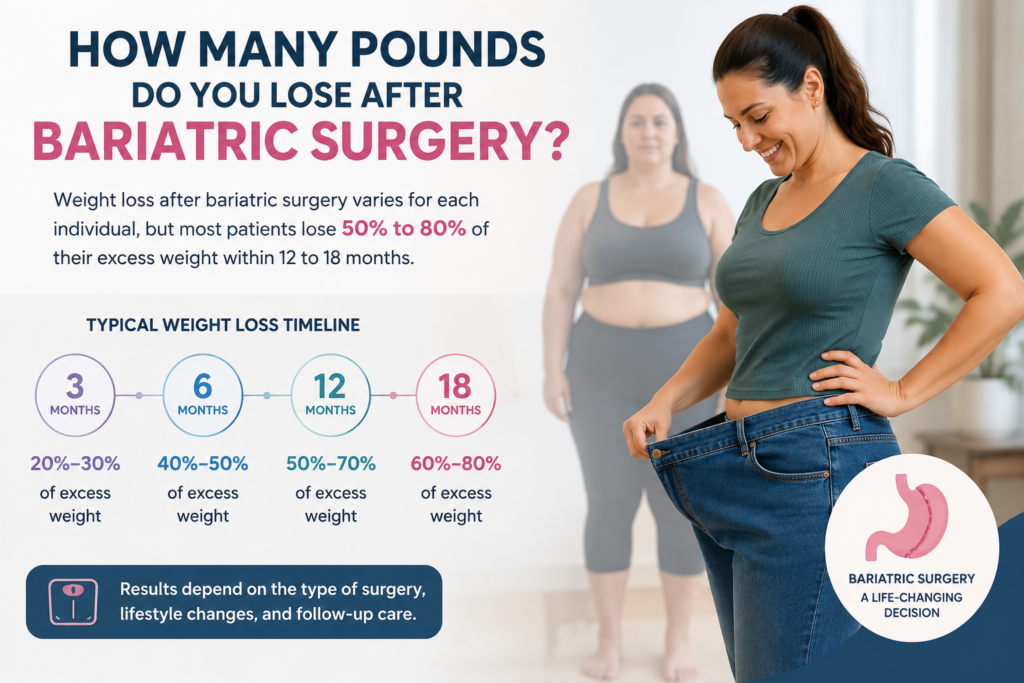
Some patients ask for a single number before they book their flight. They want to know exactly how many pounds do you lose after bariatric surgery and when the change becomes visible. The honest answer is that weight loss can be dramatic, but it is never one-size-fits-all. Your starting weight, the procedure you choose, your metabolism, and how closely you follow the post-op plan all shape the result.
For most people, bariatric surgery is not about losing a small amount of weight. It is designed for meaningful, life-changing weight reduction when diet and exercise alone have not delivered lasting results. That is why the better question is not just how much weight you can lose, but how safely and consistently you can lose it with the right surgical team and support.
How many pounds do you lose after bariatric surgery on average?
Most patients lose a substantial amount of weight in the first 12 to 18 months after surgery. The exact number depends heavily on your starting point. Someone who begins at 320 pounds will usually lose more total pounds than someone who begins at 240 pounds, even if their percentage of weight loss is similar.
In general, patients often lose around 25% to 35% of their total body weight after a gastric sleeve, and around 30% to 40% after a gastric bypass. In pounds, that can mean 60, 80, 100, or even more. For example, if a patient weighs 300 pounds before surgery, a 30% total body weight loss would be about 90 pounds. If a patient weighs 250 pounds, that same percentage would be about 75 pounds.
This is why online comparisons can be misleading. Two people may have the same procedure and follow the same plan, but their total pounds lost can still look very different. The more useful benchmark is whether you are losing weight steadily and improving your health.
Weight loss by procedure
The type of surgery matters. Gastric sleeve and gastric bypass are the two most common options for international patients, and both can produce strong results.
Gastric sleeve
With a gastric sleeve, the stomach is reduced in size, which helps you feel full much faster and eat less. This procedure is popular because it is effective and relatively straightforward compared with more complex bariatric operations. Many sleeve patients lose a large amount of weight during the first year, often reaching their lowest weight around 12 to 18 months after surgery.
Gastric bypass
Gastric bypass tends to produce slightly faster or greater weight loss for some patients because it changes both stomach size and how the digestive system works. It can be a strong option for patients with significant obesity, reflux, or certain metabolic concerns. Because it changes digestion more than a sleeve, it may also require closer long-term vitamin monitoring.
Why the numbers are not identical
A surgery does not burn pounds on its own. It creates a powerful tool. The final result still depends on how that tool is used. Patients who stay active, meet protein goals, attend follow-up checks, and avoid high-calorie liquid foods usually do better than those who return quickly to old habits.
What affects how many pounds you lose after bariatric surgery?
Your result depends on more than the operation itself. Starting BMI is one of the biggest factors. Patients with a higher starting weight often lose more total pounds, though not always a higher percentage.
Age can play a role, as can hormone balance, insulin resistance, sleep quality, and mobility. Patients who struggle with emotional eating may need more structured behavioral support to protect their results. This is not a sign of failure. It is part of treating obesity as a long-term medical condition rather than a short-term willpower issue.
The recovery phase matters too. In the first weeks after surgery, your diet progresses from liquids to soft foods and then to more regular meals. Patients who follow these steps carefully usually feel better, recover more smoothly, and build stronger eating habits early.
A realistic timeline for weight loss
Most patients notice early weight loss quickly, especially in the first three months. That period can feel exciting because the scale often moves fast. Clothes fit differently, walking gets easier, and small daily tasks start to feel less exhausting.
From months three to six, weight loss is often still strong, though it may slow slightly compared with the first few weeks. By six to twelve months, many patients continue to lose steadily. After the first year, the pace usually slows more, and the focus shifts from active weight loss to maintaining the result.
It is also normal to hit stalls. A short plateau does not mean the surgery stopped working. The body adjusts as weight drops, and some periods are slower than others. What matters most is the long-term trend.
What does success really look like?
Success is not only about the final number on the scale. Many patients see major improvements in blood sugar, blood pressure, joint pain, sleep apnea, and energy levels before they reach their goal weight. Some come off medications. Others feel comfortable traveling, socializing, or shopping for clothes again.
That is why realistic expectations matter. If you are hoping to lose 20 pounds, bariatric surgery is usually more treatment than you need. But if you are facing serious obesity and want a medically guided path to major change, it can be one of the most effective options available.
Why some patients lose less than expected
There are cases where weight loss is slower or smaller than a patient hoped. Sometimes the issue is grazing, frequent snacking, or calorie-dense drinks that pass through the stomach easily. Sometimes physical activity remains limited. In other cases, stress, poor sleep, or untreated emotional eating makes consistency difficult.
This is where good guidance becomes essential. The strongest bariatric experience is not just the day of surgery. It is the structure around it – pre-op evaluation, clear instructions, follow-up planning, and a team that helps you stay organized from the first consultation onward.
For international patients, this matters even more. Traveling abroad for surgery should feel coordinated, not chaotic. At Chic Clinic Istanbul, patients are guided through the process with consultation support, travel planning, and on-the-ground assistance designed to make the experience feel manageable from start to finish.
Loose skin, plateaus, and other realities
Significant weight loss can come with trade-offs. Loose skin is common after major weight reduction, especially if you lose a high number of pounds. Some patients are comfortable with it, while others later consider body contouring procedures.
Plateaus are another reality. You may lose quickly, then stall, then start losing again. That pattern is frustrating, but common. The key is not reacting by abandoning the plan.
There is also the emotional side of change. Rapid weight loss can improve confidence, but it can also bring adjustment challenges. Relationships, routines, and self-image may shift. Patients do best when they prepare for the mental side of transformation, not just the physical one.
How to set the right expectation before surgery
A good consultation should give you a personalized estimate, not a generic promise. Surgeons usually look at your current weight, BMI, medical history, eating habits, and procedure type before discussing expected results. If anyone guarantees a specific number of pounds without reviewing your case properly, that is a red flag.
The better approach is to ask practical questions. How much weight do patients with a profile like yours usually lose? What happens if weight loss slows? What kind of follow-up support is available? These questions lead to better decisions than chasing a perfect number.
Is bariatric surgery worth it for the weight loss alone?
For many patients, yes, but the best results go beyond appearance. Looking better is a real motivation, and there is nothing wrong with that. Still, the deeper value often shows up in daily life: climbing stairs without pain, needing fewer medications, sleeping better, and feeling in control again.
If you are researching how many pounds do you lose after bariatric surgery, you are probably trying to picture your own future. That future should include a realistic number, but also a realistic process. Strong results come from the right procedure, skilled surgical care, and a support system that keeps your journey organized and clear.
The most helpful place to start is with a proper case review, because the number that matters most is not someone else’s result. It is the result that makes your own life easier, healthier, and more comfortable to live.