Breast Lift

Breast Lift (Mastopexy)

Breast lift, medically known as mastopexy, is a surgical procedure designed to lift and reshape sagging breasts, improving their position, symmetry, and overall aesthetic appearance. The goal of breast lift surgery is to create natural-looking, firmer, and more proportionate breasts while enhancing body harmony.

Breast lift surgery can be performed on women of all ages who experience breast sagging, regardless of whether they have given birth. Breast sagging may be caused by structural factors, but it commonly develops due to pregnancy, breastfeeding, significant weight gain or weight loss, aging, and the natural effects of gravity over time.


How to Identify Breast Sagging (Breast Ptosis)

To determine whether breast sagging is present, a simple initial evaluation can be done by standing in front of a mirror and observing the position of the nipples in relation to the inframammary fold (the natural crease beneath the breast). In plastic surgery, breast sagging—known as breast ptosis—is classified into four main categories:

Types of Breast Ptosis

  • Mild Ptosis:
    The nipple is located at the level of the inframammary fold or up to 1 cm below it.

  • Moderate Ptosis:
    The nipple is positioned 1–3 cm below the inframammary fold.

  • Advanced Ptosis:
    The nipple is located more than 3 cm below the inframammary fold.

  • Pseudoptosis:
    The nipple remains above the inframammary fold, while the lower portion of the breast tissue hangs below the fold.

Accurate evaluation of breast ptosis is essential in determining the most appropriate breast lift technique and achieving optimal surgical results.
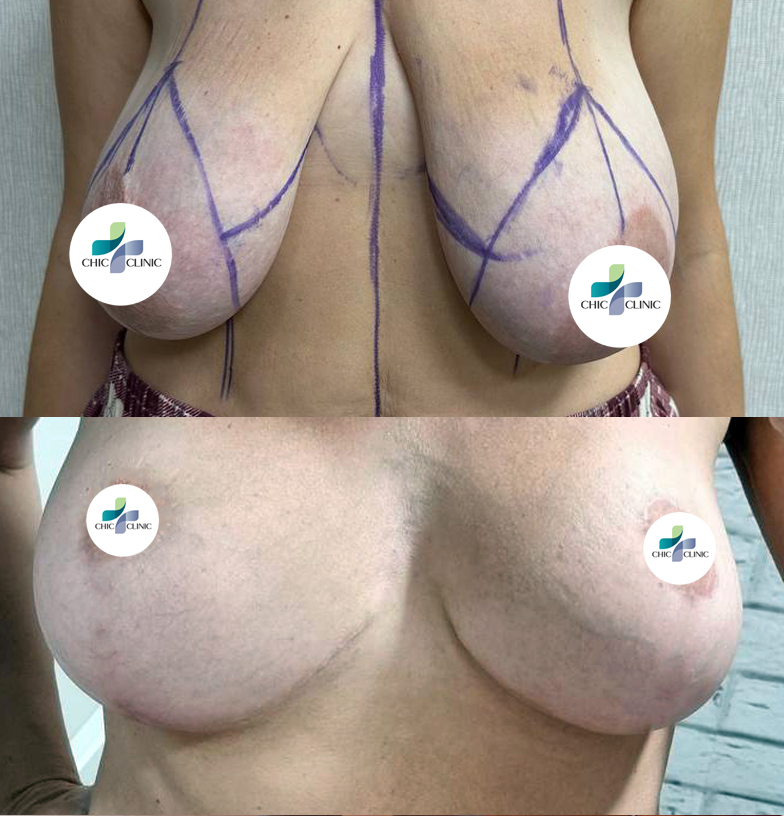
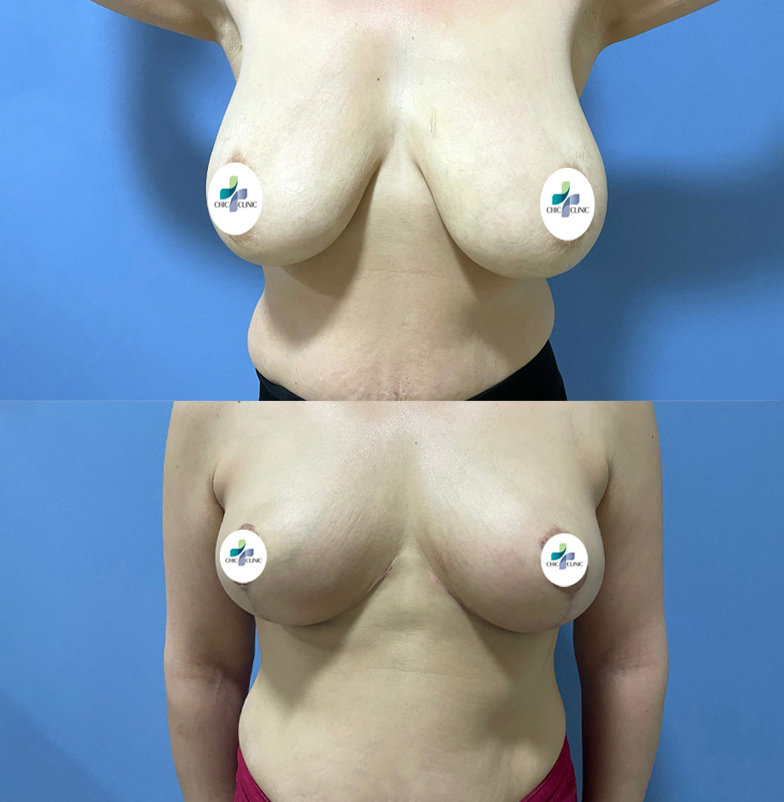
Breast Lift Techniques (Mastopexy Procedures)

When breast sagging occurs due to factors such as pregnancy, breastfeeding, rapid weight changes, or aging, and the nipple–areola complex is positioned too low on the breast, a breast lift (mastopexy) may be recommended. In cases where the desired breast shape and volume cannot be achieved with lifting alone, breast implants may be combined with a breast lift to obtain optimal results.

Breast lift surgery can be performed using different surgical techniques, depending on the degree of breast sagging, skin elasticity, and the patient’s aesthetic goals.


Breast Lift Incision Techniques

Inverted T (Anchor) Incision

In this technique, an inverted T-shaped incision is made around the areola, extending vertically downward and continuing horizontally along the inframammary fold (the natural crease beneath the breast).
This method is most commonly used in patients with advanced breast sagging or significant breast reduction, as it allows for maximum reshaping and lifting.

Lollipop (Vertical) Incision

The lollipop incision runs vertically from the areola down to the inframammary fold without the horizontal incision. This technique is generally preferred for patients with moderate breast sagging, offering effective lifting with fewer scars.

Periareolar Incision

In patients with mild breast sagging, the incision is made only around the areola. This technique is suitable for minimal lifting and provides a more discreet scar.


Breast Reshaping Process

Regardless of the technique used, the surgical steps follow a similar principle. First, the tissue surrounding the nipple is carefully released. Excess breast tissue and skin are then removed, and the breast is reshaped to achieve a firmer, more youthful contour. Finally, the nipple–areola complex is repositioned to its ideal anatomical location for a natural and symmetrical appearance.