
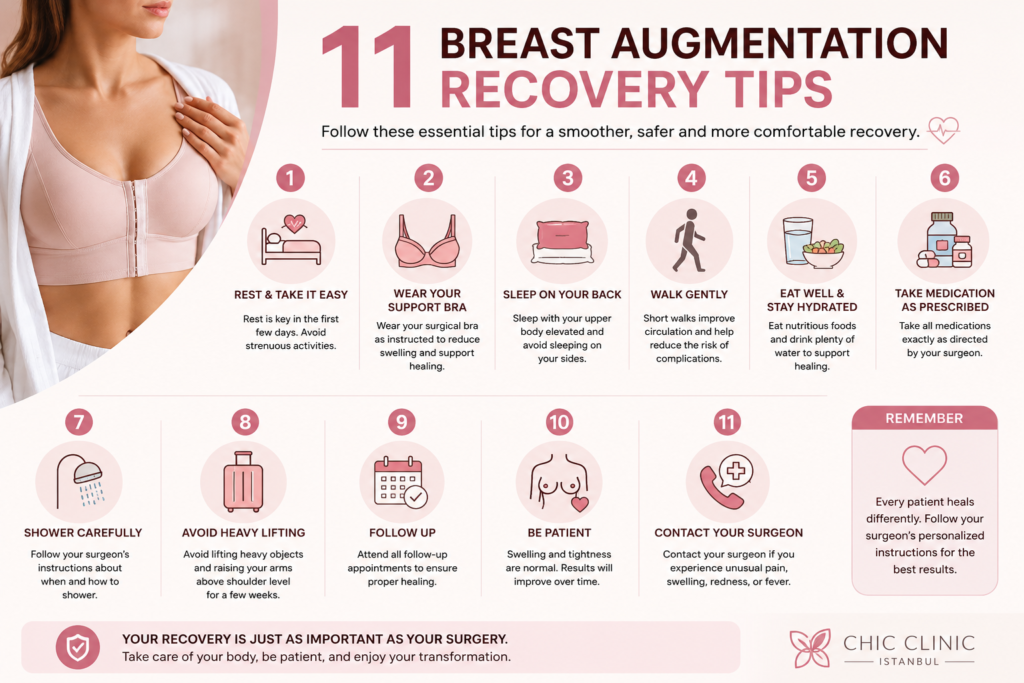
The first few days after surgery are usually the part patients think about most – and for good reason. If you are planning your procedure abroad or comparing options in Istanbul, practical breast augmentation recovery tips can make the whole experience feel more manageable, more comfortable, and far less stressful.
Recovery is not just about getting through soreness. It is about protecting your result, reducing unnecessary swelling, and giving your body the best chance to heal well. The smoothest recoveries usually come from good planning, realistic expectations, and close communication with your surgical team.
Why breast augmentation recovery tips matter
Breast augmentation is a highly popular procedure, but recovery is still personal. Implant size, implant placement, incision type, your natural tissue, and your day-to-day activity level all affect how you feel afterward. Two patients can have the same surgery and very different first weeks.
That is why broad advice from social media often falls short. A patient who returns to a desk job in a few days may feel very different from someone traveling internationally, caring for children, or combining surgery with hotel recovery. The goal is not to chase a “perfect” timeline. The goal is to follow the right instructions for your case and avoid the common mistakes that slow healing down.
Start recovery planning before surgery
The best recovery often begins before you even arrive for your operation. If you are traveling for breast augmentation, think beyond the surgery date itself. You will want loose front-opening clothing, supportive pillows, easy meals, prescribed medications, and a clear plan for who is helping you in the first 24 to 72 hours.
This is also the time to ask very practical questions. When can you shower? When can you sleep on your side? What kind of surgical bra will you wear? How long should you stay in the city before flying home? Patients feel calmer when these details are handled early instead of trying to solve them while groggy and sore.
For international patients, coordination matters just as much as medical care. A well-organized clinic experience with airport transfers, hotel support, and direct access to your coordinator can take a lot of pressure off the recovery period.
The first 72 hours: focus on rest and routine
The first few days are usually about tightness, swelling, pressure, and limited arm movement. Many patients describe the feeling less as sharp pain and more as chest heaviness, especially when implants are placed under the muscle. This is normal, but it can still feel surprising if you were expecting to bounce back immediately.
Rest matters, but complete inactivity is not the goal. Short, gentle walks around your room or hotel suite can support circulation and help you feel better. What you want to avoid is overdoing it because you suddenly feel “fine” for an hour. That early burst of energy can lead to more swelling later.
Take medications exactly as instructed. Skipping pain medication and then trying to catch up once discomfort builds can make the first days harder than they need to be. The same goes for antibiotics or any additional prescriptions your surgeon gives you.
Sleep position can change your comfort level fast
One of the most useful breast augmentation recovery tips is also one of the simplest – sleep on your back with your upper body slightly elevated. This position can help reduce swelling and keep pressure off the chest.
For side sleepers, this adjustment is often the most annoying part of the first week. It helps to build a stable sleeping setup with extra pillows around your arms and sides so you do not roll over by accident. A recliner can work well for some patients, but not everyone finds it comfortable. It depends on your body and how much support your back needs.
Support garments are not optional
Your post-op bra or compression garment is there for a reason. It helps control swelling, supports healing tissue, and keeps the breasts in a more stable position while your body adjusts. Many patients are eager to switch into pretty bras too early, but that is rarely worth it.
Wear exactly what your surgeon recommends and for as long as they recommend it. Some patients need a surgical bra full-time for several weeks, while others may have slightly different instructions depending on implant type and technique. This is one of those areas where personalized guidance matters more than general online advice.
Movement is good, but upper-body strain is not
Patients often ask when they can get back to normal. The honest answer is that “normal” returns in stages. Walking is usually encouraged early. Heavy lifting, intense workouts, pushing, pulling, and raising your arms aggressively are a different story.
If you are traveling home with luggage, this matters even more. Lifting a suitcase into an overhead bin or carrying a heavy tote can put strain on the chest before you are ready. Plan for help at the airport and keep your bags light. Recovery goes more smoothly when you stop treating everyday tasks as harmless. In the first phase, even simple actions can be more demanding than they look.
Swelling, tightness, and implant settling take time
A common source of anxiety is expecting the final look too soon. Right after surgery, breasts often sit high, feel firm, and look more swollen than patients expected. That does not mean anything is wrong. It means you are early in the healing process.
Implants typically need time to settle, and the timeline varies. Some patients see noticeable softening within weeks, while for others the shape continues to refine over months. If one side seems slightly different from the other early on, that can also be part of normal healing. Symmetry often improves as swelling goes down.
Patience is part of recovery. Good results are not judged on day three.
Hydration, food, and digestion are part of healing
Patients tend to focus on the chest and forget the rest of the body. But hydration, light meals, and digestion can influence how you feel each day. Anesthesia, pain medication, and reduced movement can leave you bloated or constipated, which adds to overall discomfort.
Drink water consistently. Choose simple foods that are easy on the stomach at first, then return to balanced meals with enough protein to support healing. If your care team recommends anything specific for digestion, take that seriously. A smoother recovery is often about handling the small things before they become frustrating.
Know the difference between normal symptoms and warning signs
Good recovery advice should be reassuring, but it should also be honest. Some symptoms are expected. Mild to moderate swelling, bruising, pressure, temporary asymmetry, and soreness with movement are all common in the early phase.
What deserves prompt attention is worsening rather than gradual improvement. Fever, unusual redness, significant one-sided swelling, shortness of breath, severe pain not controlled by medication, or concerning drainage should never be brushed off. The right clinic will make it easy for you to ask questions quickly, especially if you are recovering away from home.
This is one reason many international patients prefer a guided experience. With a dedicated coordinator, translator support if needed, and clear aftercare communication, you are not left guessing what is normal.
Recovery after traveling for surgery needs extra planning
If you are flying in for your procedure, recovery is not only medical – it is logistical. You need enough time in the destination for follow-up checks, enough support for local transportation, and realistic expectations about energy levels. Sightseeing right after surgery sounds appealing when you are in Istanbul, but most patients feel better when they treat the trip like a recovery stay, not a vacation.
Comfortable lodging, private transfers, and easy contact with your care team can make a visible difference in how relaxed you feel. At Chic Clinic Istanbul, this kind of coordination is part of what helps international patients focus on healing instead of trying to manage every detail themselves.
Breast augmentation recovery tips for a smoother second week
By the second week, many patients feel more like themselves, but this can be the stage where they get careless. Feeling better is not the same as being fully healed. Keep following your restrictions, keep your follow-up appointments, and do not rush back into workouts or intimate activities just because swelling is improving.
This is also the period when emotional ups and downs can show up. Some patients feel excited one day and doubtful the next. That is normal. Your body is healing, your shape is still changing, and the result is not final yet. The best approach is steady aftercare, not constant self-judgment in the mirror.
A calm, well-supported recovery usually comes from simple habits done consistently – rest when your body asks for it, move carefully, follow your surgeon’s instructions, and give the result time to develop. When you treat recovery as part of the procedure rather than an afterthought, you give yourself the best chance of feeling comfortable and loving the outcome.