
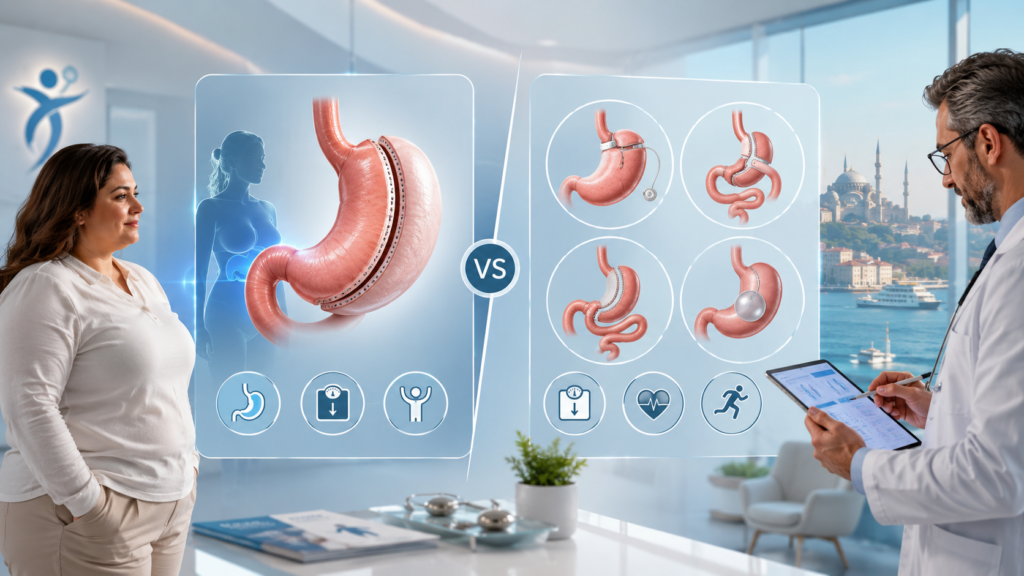
When patients message us asking about weight-loss surgery, one question comes up again and again: what is the difference between gastric sleeve and bariatric surgery? It sounds like a comparison between two separate procedures, but that is not quite accurate. Gastric sleeve is actually one type of bariatric surgery, which means the real decision is usually between a gastric sleeve and other bariatric procedures such as gastric bypass or gastric balloon.
That distinction matters because many international patients start their research with broad terms, then realize they need a more precise answer before booking consultations, flights, and time away from home. If you are comparing options in Turkey or anywhere else, the goal is not to memorize medical terminology. It is to understand which procedure fits your body, your health history, and your long-term goals.
What is the difference between gastric sleeve and bariatric surgery?
The simplest answer is this: bariatric surgery is the category, and gastric sleeve is one procedure within that category. Bariatric surgery refers to operations designed to help with significant weight loss by changing the stomach, digestion, or both. The gastric sleeve, also called sleeve gastrectomy, reduces the size of the stomach so you feel full sooner and eat less.
So when people ask about the difference between gastric sleeve and bariatric surgery, they are often really asking about the difference between gastric sleeve and other weight-loss surgeries. That is a much more useful comparison because each procedure has different benefits, trade-offs, recovery patterns, and suitability criteria.
Where gastric sleeve fits in the bariatric surgery category
Bariatric surgery can include gastric sleeve, gastric bypass, mini gastric bypass, and in some cases other weight-loss interventions depending on the clinic and surgeon assessment. These procedures are not interchangeable. They are all designed to support weight loss, but they work in different ways.
Gastric sleeve works mainly by restriction. A large portion of the stomach is removed, leaving a smaller sleeve-shaped stomach. You still digest food in the usual pathway, but you cannot eat the same volume as before. Many patients also notice reduced hunger after surgery because the part of the stomach linked to hunger hormones is removed.
Gastric bypass works through both restriction and malabsorption. The stomach is made smaller, and part of the digestive tract is bypassed, which changes how calories and nutrients are absorbed. This can make bypass more effective for some patients, especially those with certain metabolic conditions, but it also means a different long-term nutritional picture.
Gastric sleeve vs other bariatric procedures
For many patients, gastric sleeve is appealing because it is relatively straightforward compared with bypass. There is no intestinal rerouting, which often makes the procedure easier to explain and recovery easier to picture. It is widely chosen by patients who want strong weight-loss support without the added complexity of bypass anatomy.
That said, simpler does not always mean better for everyone. If a patient has severe acid reflux, uncontrolled type 2 diabetes, or certain eating patterns, another bariatric procedure may be more suitable. This is where a proper medical evaluation becomes more important than online comparisons.
Weight-loss outcomes can also vary. Gastric sleeve often delivers significant results, especially when paired with real lifestyle changes. But bypass may be recommended when a surgeon believes it offers stronger metabolic benefits or better long-term control for a specific patient profile. The right option depends on more than just the number on the scale.
Recovery and lifestyle after surgery
Patients often focus on the surgery day, but the bigger difference shows up afterward. Gastric sleeve recovery usually involves a staged diet, hydration focus, smaller meals, vitamin support, and follow-up care. You will need to adjust how you eat, how quickly you eat, and how seriously you take protein and fluids.
Other bariatric surgeries involve similar discipline, but some come with additional long-term considerations. Gastric bypass patients, for example, may need even closer monitoring of nutrient absorption and supplementation. Dumping syndrome can also be a factor with bypass, especially after high-sugar meals, which changes daily food choices in a very real way.
For international patients, this is why coordination matters. It is not only about choosing a surgeon. It is about understanding the full process, from pre-op testing to hotel stay, discharge planning, travel timing, and post-op communication once you return home. A well-organized treatment plan reduces stress and helps you focus on recovery instead of logistics.
Who is a good candidate for gastric sleeve?
Gastric sleeve is often a strong option for adults with obesity who have struggled to lose weight through diet and exercise alone. It may suit patients who want a proven surgical option with substantial weight-loss potential and a shorter procedure than some alternatives. It is also commonly considered for people who prefer not to have intestinal rerouting.
Still, not every patient is an ideal sleeve candidate. If you have severe reflux, prior abdominal surgery, specific gastrointestinal issues, or medical conditions that affect surgical planning, another option may be better. Good bariatric care is never one-size-fits-all. A responsible team will look at your BMI, medical history, medications, eating habits, and expectations before recommending anything.
This is one reason patients traveling abroad should avoid choosing surgery based only on price. The better question is whether the recommendation is tailored to you. The right clinic experience should make the process feel clear and guided, not rushed.
Understanding the real decision behind the search term
The phrase difference between gastric sleeve and bariatric surgery is common because many people use bariatric surgery as if it means gastric bypass or weight-loss surgery in general. That is understandable, especially if you are early in your research. But once you move closer to treatment, the decision becomes much more specific.
You are usually choosing between procedure types within bariatric surgery, not between gastric sleeve and bariatric surgery as separate categories. That shift in understanding helps you ask better questions during consultation. Instead of asking which term is better, you can ask which operation matches your health profile and long-term goals.
That is also when practical details start to matter more. How long will you stay in Istanbul? What pre-op tests are included? Will you have translator support? What does follow-up look like after you fly home? For many overseas patients, confidence comes from knowing the journey is organized from the first WhatsApp conversation to the final airport transfer.
Choosing safely and confidently as an international patient
If you are considering treatment abroad, your decision should be based on medical suitability first, then on service quality and travel support. The best patient experience combines experienced bariatric surgeons with clear communication, careful planning, and consistent aftercare guidance.
At Chic Clinic Istanbul, many patients begin with a remote consultation and case review before making travel plans. That first step is valuable because it helps filter out uncertainty early. You can share your health background, discuss your goals, and understand whether gastric sleeve or another bariatric procedure makes more sense before committing to the trip.
A good clinic will also be transparent about what surgery can and cannot do. Weight-loss surgery is a powerful tool, not a shortcut. It supports appetite control, portion reduction, and better health outcomes, but long-term success still depends on follow-up, food choices, supplementation, and consistency.
Which option makes more sense?
If you want the clearest answer possible, here it is: gastric sleeve is bariatric surgery, but it is not the only kind. The real comparison is between gastric sleeve and other bariatric procedures, each with different strengths and limitations.
For patients who want a less complex anatomy change and strong weight-loss potential, gastric sleeve may be the right fit. For those with reflux, metabolic concerns, or specific medical needs, another bariatric surgery may be the smarter recommendation. The right answer is personal, and it should come from a proper evaluation rather than a generic online checklist.
The best next step is not guessing the perfect procedure on your own. It is getting a clear, professional assessment so your decision feels informed, supported, and realistic from the start.