
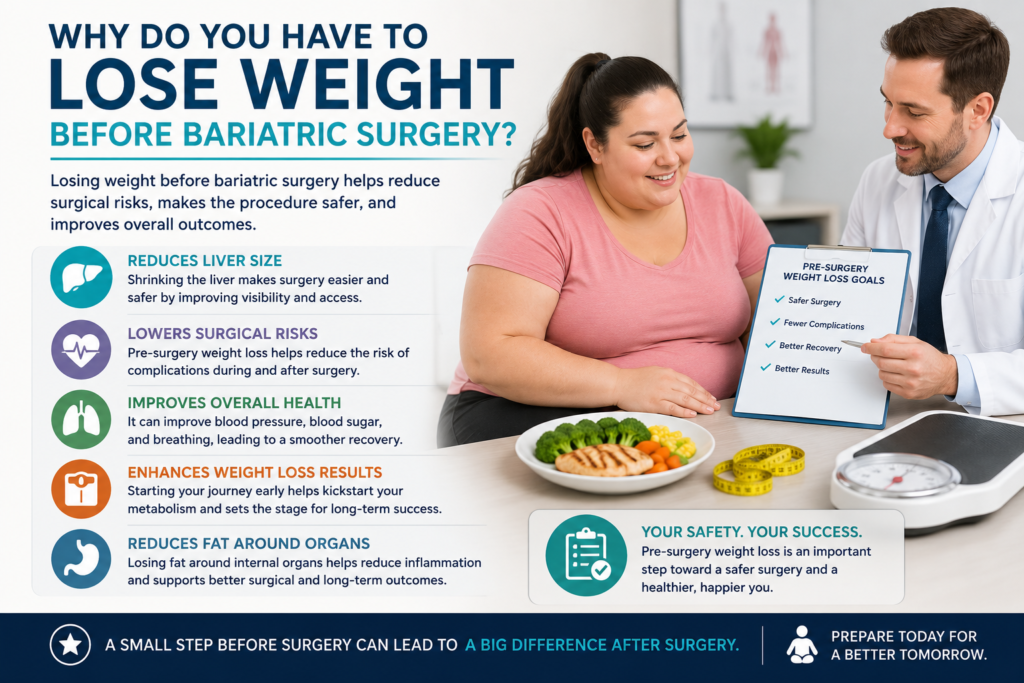
If you have been told to drop a certain amount of weight before your procedure, your first reaction is usually the same: If bariatric surgery is meant to help me lose weight, why do you have to lose weight before bariatric surgery in the first place? It is a fair question, and it does not mean your surgeon is making things harder for you. In most cases, that pre-op goal is there to make your surgery safer, smoother, and more effective.
For many patients, this is one of the most misunderstood parts of the bariatric journey. Being asked to lose weight before surgery can feel frustrating, especially if long-term weight loss has already been a struggle. But pre-surgery weight loss is not about proving willpower. It is about reducing surgical risk, helping your body prepare, and giving your medical team better operating conditions.
Why do you have to lose weight before bariatric surgery?
The short answer is that even a modest amount of weight loss before bariatric surgery can improve safety. When a patient carries extra fat around the abdomen and liver, the operation can become technically more difficult. A very enlarged fatty liver can sit over the stomach, making access harder during procedures such as gastric sleeve or gastric bypass.
When you follow the prescribed pre-op diet and lose some weight, the liver often shrinks. That matters more than many patients realize. A smaller liver gives the surgeon better visibility and more room to work laparoscopically, which can reduce operating time and lower the chance of complications.
This is also why your surgeon may be quite specific about timing. The final days or weeks before surgery are especially important because that is when the liver reduction diet often has the biggest effect. It is not just about the number on the scale. It is about creating safer surgical conditions inside the body.
It is about safety, not punishment
Patients sometimes worry that a pre-op weight loss target is a test they can fail. In reality, experienced bariatric teams use it as a preparation tool. The goal is to lower anesthesia risks, improve breathing, support heart function, and reduce strain on the body during and after surgery.
Obesity can increase the risk of blood clots, wound issues, and respiratory complications. Even a relatively small amount of weight loss may help lower those risks. That does not mean every patient must lose a large amount. It depends on body mass index, medical history, the planned procedure, and the surgeon’s protocol.
There is also a practical point here. Bariatric surgery is a major step, and the pre-op period helps patients start adjusting to the eating pattern they will need after surgery. Smaller portions, more protein, better hydration, and less sugar are not temporary rules. They are part of long-term success.
The liver reduction diet matters more than people expect
One of the biggest reasons surgeons ask for pre-op weight loss is to reduce liver size. Many bariatric patients have nonalcoholic fatty liver disease, even if they do not know it. A fatty liver becomes heavier, larger, and more fragile.
During bariatric surgery, especially minimally invasive surgery, the liver often needs to be lifted or moved gently to access the stomach. If it is enlarged, this becomes more difficult and sometimes less safe. That is why many surgeons prescribe a low-calorie, high-protein pre-op diet for one to three weeks before surgery.
This stage can be strict, but it has a clear purpose. Patients often think the hard part starts after surgery. In truth, preparation starts before the operation, and this phase can make a meaningful difference in how smoothly the procedure goes.
Does every patient have to lose weight before surgery?
Not always in the same way, and not always to the same degree. Some patients are given a firm target, such as losing 10 to 20 pounds. Others may be asked to follow a specific liquid or low-carb diet without being judged solely on the total amount lost.
It depends on your starting weight, your health conditions, and the type of bariatric surgery planned. A patient with severe sleep apnea, uncontrolled diabetes, or a very high BMI may be asked to complete more structured preparation than someone with fewer medical risks. Insurance requirements can also play a role in some countries, although self-pay international patients are often following the surgeon’s medical protocol rather than an insurer’s checklist.
That is why comparisons are not always useful. One patient may need a short liver-shrinking diet. Another may be told to lose more weight over several weeks. The reason is not inconsistency. It is individualized planning.
Why pre-op weight loss can help your recovery
A safer operation is only part of the reason. Losing some weight before surgery may also support a smoother recovery. Patients who begin improving their habits ahead of time often adapt faster after the procedure.
For example, learning to sip fluids regularly, prioritize protein, and avoid high-sugar foods before surgery can make the post-op transition less overwhelming. Recovery after gastric sleeve or bypass comes with clear dietary stages, and patients who have already started that mindset usually feel more prepared.
There is also a mental benefit. Early progress can build confidence. If you see that you can follow the plan before surgery, it often becomes easier to trust the process after surgery, when the routine changes even more.
This does not mean you must do it alone
Pre-op weight loss can feel stressful, especially for international patients trying to coordinate consultations, travel plans, testing, and procedure dates at the same time. That is exactly why organized guidance matters.
A strong patient coordination team helps take the guesswork out of the process. Clear instructions, realistic timelines, and direct communication with your care team can make a big difference. At Chic Clinic Istanbul, for example, patients typically begin with a consultation and case review so expectations are clear before travel is arranged. That kind of structure helps reduce anxiety and keeps the journey organized from the start.
What happens if you do not lose the required weight?
This is where honesty matters. Sometimes surgery can still go ahead if the surgeon believes it is safe. In other cases, the procedure may need to be delayed. The deciding factor is not whether you were perfect. It is whether the surgical team feels conditions are safe enough to proceed.
If a patient has not followed the pre-op plan and the liver remains too large, the operation may be technically unsafe or too difficult to complete as intended. No good surgeon wants to take avoidable risks just to stay on schedule. A short delay is disappointing, but it is better than moving forward under poor conditions.
That is why communication is so important. If you are struggling with the diet, tell your team early. They may be able to adjust the plan, give you more structure, or explain exactly what matters most in the final days before surgery.
Common misconceptions about pre-surgery weight loss
One common myth is that if you cannot lose weight before surgery, you are not a good candidate. That is not automatically true. Many people seek bariatric surgery precisely because sustained weight loss has been difficult. The pre-op phase is not a character test.
Another misconception is that the more weight you lose before surgery, the better. In reality, overly aggressive or poorly supervised dieting is not the goal. Your surgeon wants controlled, medically appropriate preparation, not crash dieting.
Patients also sometimes think pre-op weight loss makes surgery unnecessary. Usually, that is not the case. A short period of structured weight loss can help with safety, but it does not replace the long-term metabolic and hormonal benefits that bariatric surgery may offer the right candidate.
How to approach this stage realistically
The most helpful mindset is to treat pre-op weight loss as part of the procedure, not a separate obstacle. It is one phase of the same treatment journey. If your team asks you to follow a liver-shrinking diet, avoid certain foods, stop smoking, or improve hydration, those steps are all part of preparing your body for surgery.
Focus on consistency, not perfection. Follow the plan you were given, ask questions early, and do not rely on online guesses from patients with different bodies and different surgical protocols. The right approach is the one your surgeon recommends for your case.
And if you are traveling abroad for treatment, choose a provider that gives you more than a surgery date. Good coordination, clear pre-op instructions, and responsive communication matter just as much as the procedure itself. When patients feel supported before they even board the plane, the entire experience becomes more manageable.
Being asked to lose weight before bariatric surgery can feel frustrating at first, but in most cases it is a sign that your team is thinking ahead, protecting your safety, and setting you up for a better start to a life-changing procedure.