
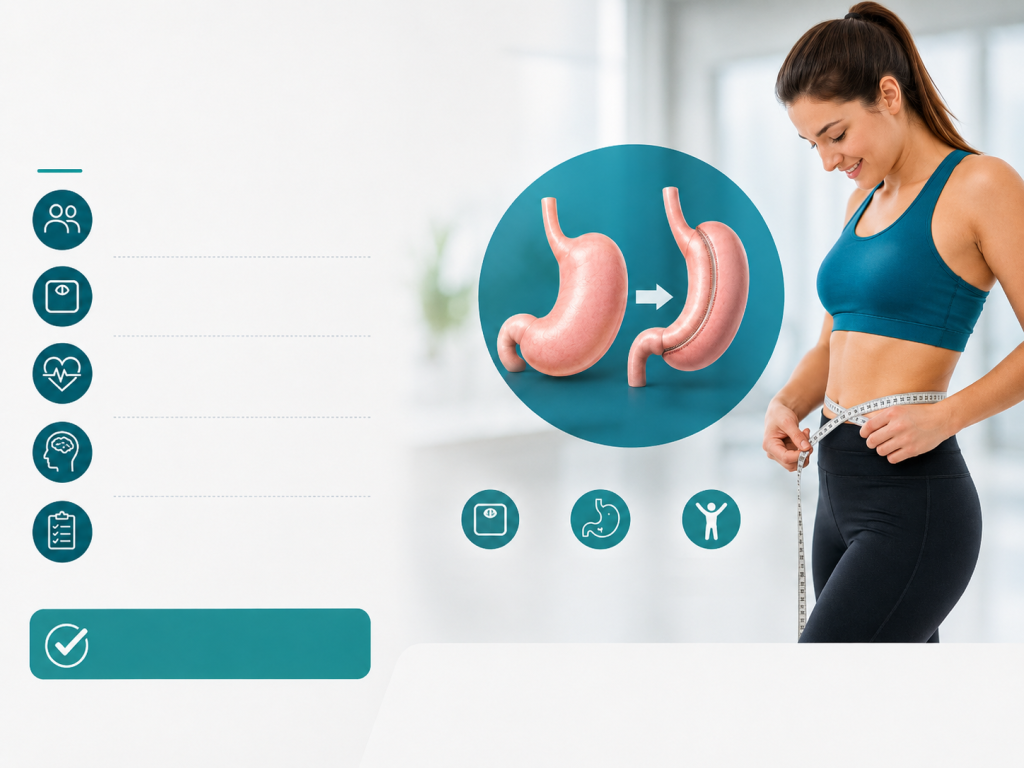
If you are asking who qualifies for gastric sleeve, you are probably not looking for theory. You want to know whether this surgery is a realistic option for you, what doctors actually check, and whether you can move forward with confidence. That is exactly where a proper medical evaluation matters.
Gastric sleeve surgery is not simply for anyone who wants to lose weight faster. It is usually recommended for adults with obesity who have struggled to lose weight through diet, exercise, and medically supervised efforts, especially when excess weight is affecting health, mobility, confidence, or daily life. The goal is not just a smaller stomach. The goal is a safer, healthier, more sustainable path forward.
Who qualifies for gastric sleeve in most cases?
In most cases, patients qualify based on a combination of body mass index, weight-related health conditions, medical history, and readiness for surgery. The standard starting point is BMI.
Many surgeons consider gastric sleeve for patients with a BMI of 40 or higher, even if they do not yet have major obesity-related illnesses. Patients with a BMI of 35 or higher may also qualify if they have related conditions such as type 2 diabetes, high blood pressure, sleep apnea, joint pain, fatty liver disease, or other health issues linked to obesity. In some cases, patients with a lower BMI may still be considered, but that depends on the clinic, the surgeon, and the full medical picture.
This is where expectations need to stay realistic. BMI is important, but it is not the only factor. A patient with a qualifying BMI still needs to be medically suitable for anesthesia and surgery. A patient slightly below a typical BMI cutoff may still be considered if their health risks are serious enough. It depends on the individual case.
The main criteria doctors review
A surgeon does not approve gastric sleeve based on weight alone. The decision is usually based on several checkpoints reviewed together.
BMI and obesity history
Doctors want to see whether your current BMI falls within accepted treatment guidelines, but they also look at your long-term weight history. If you have lived with obesity for years and repeatedly regained weight after structured attempts to lose it, that supports the case for bariatric surgery.
Short-term weight gain without a broader obesity history may be approached differently. Bariatric surgery is meant for chronic weight struggles, not quick cosmetic slimming.
Existing health conditions
Obesity-related health problems strengthen your candidacy. Patients with insulin resistance, type 2 diabetes, hypertension, sleep apnea, high cholesterol, PCOS, back pain, and reduced mobility often qualify more clearly because the surgery may improve more than body weight.
This matters because gastric sleeve is considered a metabolic procedure as well as a weight-loss procedure. For many patients, the decision is about protecting long-term health, not only appearance.
Previous attempts to lose weight
Most surgeons expect that you have already tried to lose weight through diet plans, exercise, medications, or professional support. That does not mean you need a perfect record. It means there should be a clear pattern showing that traditional methods have not delivered lasting results.
This point is often misunderstood. Failing to keep weight off is not a personal failure. For many patients with obesity, the body pushes hard against long-term weight loss. Surgery can change that balance.
Age and general health
Most gastric sleeve candidates are adults, and many fall within a broad range from young adulthood through middle age. Older patients may still qualify, but their heart health, lung function, recovery capacity, and overall surgical risk need more careful review.
Doctors also assess whether you have uncontrolled conditions that could make surgery unsafe right now. If blood pressure is poorly controlled, if there are untreated heart issues, or if there is a serious gastrointestinal concern, you may need additional treatment or testing before approval.
Mental and emotional readiness
This part matters more than many patients expect. Gastric sleeve changes how you eat, how much you eat, and how your body responds to food. It also requires discipline after surgery.
Doctors often want to know whether you understand the lifestyle changes involved, whether you can follow nutrition guidance, and whether there are unmanaged mental health concerns or eating disorders that need support first. This is not about judging patients. It is about setting them up for a safer and more successful result.
Who may not qualify right away?
Some patients are interested in gastric sleeve but are not immediate candidates. That does not always mean a permanent no. In many cases, it means more preparation is needed first.
Patients may be asked to wait or complete further evaluation if they have untreated psychological conditions, active substance abuse, severe uncontrolled reflux, certain stomach disorders, major surgical risk factors, or medical issues that increase anesthesia risk. Pregnancy or plans for immediate pregnancy may also delay surgery.
There are also patients who technically want surgery but are not ready for the aftercare. If someone is unwilling to follow nutritional rules, vitamin use, hydration requirements, and follow-up recommendations, a responsible surgeon may advise against proceeding until expectations are more realistic.
That can feel frustrating, especially for international patients eager to schedule travel quickly. Still, careful screening protects the outcome. A smooth surgery means very little if the patient is not in the right position to recover well.
Who qualifies for gastric sleeve abroad?
For patients considering treatment in Turkey, the qualification process usually starts remotely. This is especially helpful for international patients who want clarity before booking flights or hotel stays.
At Chic Clinic Istanbul, the first step is typically a WhatsApp consultation with medical review. Patients share basic health details, height and weight, medical history, past surgeries, and in some cases photos or test results. That early screening helps identify whether gastric sleeve is likely to be suitable before travel plans are finalized.
After that, final approval still depends on in-person assessment, blood work, and the surgeon’s direct evaluation. This is important to understand. A remote review can indicate that you are a strong candidate, but the final decision should always be made by the treating surgeon after proper testing.
For international patients, this concierge-style process can remove a lot of stress. You do not need to guess whether you might qualify. You can get a structured case review first, ask practical questions, and understand what documents or tests may be required.
Gastric sleeve is not the right fit for every patient
Some patients qualify for bariatric surgery but may be better suited to a different procedure. That is one of the biggest reasons proper consultation matters.
If a patient has severe acid reflux, for example, gastric bypass may sometimes be preferred over sleeve gastrectomy. If someone has had prior abdominal surgery or a more complex metabolic history, the recommendation may shift. Likewise, if a patient expects surgery to work without changing eating habits, the issue may not be qualification but procedure choice and readiness.
This is why a trustworthy clinic does not simply say yes to everyone. The best guidance is individualized. The right operation is the one that fits your body, health profile, and long-term goals.
What doctors want to hear from you
Patients often assume they need to say the perfect thing during consultation. That is not true. What matters most is honesty.
Tell the medical team how long you have struggled with weight, what you have tried, what health issues you are dealing with, and what results you hope to achieve. Be transparent about medications, emotional eating, smoking, alcohol use, prior surgeries, and any diagnoses. These details are not obstacles to hide. They are part of building a safe treatment plan.
Strong candidates are not perfect candidates. They are informed, open, and ready to follow guidance.
Signs you may be a strong candidate
You may be a strong candidate for gastric sleeve if your BMI is in the qualifying range, your weight has been difficult to control over time, obesity is affecting your health or quality of life, and you are ready for long-term lifestyle change. You may also be a strong candidate if you want a structured treatment path with medical support rather than another cycle of short-term dieting.
The best next step is not self-diagnosing from a BMI chart. It is getting your case reviewed properly. A good bariatric team will tell you clearly whether you qualify, whether you need more preparation, or whether another option would serve you better.
If you have been living with the physical and emotional weight of obesity for years, asking the question is already progress. The right answer comes from a real medical assessment, but for many patients, gastric sleeve is not out of reach. It may be the turning point that finally makes lasting change possible.