
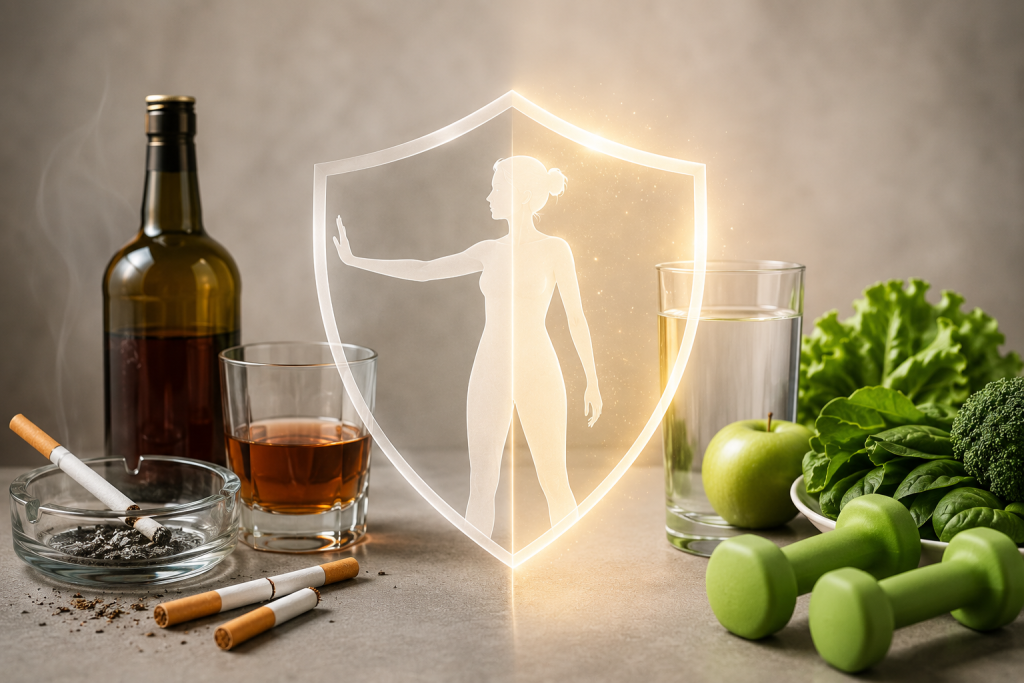
Stopping smoking before surgery is one of the most important steps for safer anesthesia, better healing, and a smoother recovery. Preparing for aesthetic surgery is not only about choosing the right surgeon or planning your travel dates. It is also about preparing your body for a safer operation and a smoother recovery.
Two of the most important lifestyle factors before and after surgery are smoking and alcohol consumption. Many patients underestimate their effect, but both can influence anesthesia, blood circulation, wound healing, swelling, bruising, infection risk, and the final aesthetic result.
For this reason, patients are strongly advised to stop smoking and drinking alcohol before and after cosmetic surgery.
Why Is Smoking Dangerous Before Surgery?
Smoking affects the body in several ways that can create problems during and after surgery. Nicotine can narrow blood vessels and reduce blood flow to healing tissues. This means less oxygen reaches the surgical area, which may slow down healing and increase the risk of wound complications.
Smoking can also affect the lungs and heart, making anesthesia and recovery more difficult. Patients who smoke may have a higher risk of coughing, breathing problems, delayed healing, infection, poor scar quality, and skin or tissue complications after surgery. Medical organizations advise patients to stop smoking before surgery and follow their surgeon’s instructions carefully. (madeforthismoment.asahq.org)
Why Is Alcohol a Problem Before Surgery?
Alcohol can also negatively affect the surgical process. It may interfere with hydration, sleep quality, the immune system, blood clotting, and the body’s ability to heal properly.
Drinking alcohol before surgery may also affect anesthesia planning. Patients who drink regularly may need different anesthesia management, so it is important to be honest with the medical team about alcohol consumption. Anesthesia specialists recommend avoiding alcohol before surgery, especially close to the operation date. (Australian Society of Anaesthetists)
How Long Before Surgery Should You Stop?
Ideally, patients should stop smoking and drinking alcohol 2 weeks before aesthetic surgery.
This gives the body more time to improve circulation, oxygen delivery, immune response, hydration, and healing capacity. A longer break is always better, especially for smokers, because some surgical guidance recommends stopping smoking several weeks before surgery when possible. (bradfordhospitals.nhs.uk)
However, if a patient cannot stop 2 weeks before surgery, the minimum recommendation is to stop smoking and alcohol at least 1 week before surgery.
In simple terms:
| Habit | Ideal timing before surgery | Minimum timing before surgery |
|---|---|---|
| Smoking | 2 weeks before surgery | At least 1 week before |
| Alcohol | 2 weeks before surgery | At least 1 week before |
Why Should You Avoid Smoking After Surgery?
After surgery, the body enters the healing phase. During this period, blood flow, oxygen, nutrition, and rest are essential for proper recovery.
Smoking after surgery can reduce oxygen supply to the tissues and may increase the risk of delayed wound healing, infection, wound opening, poor scarring, and skin complications. This is especially important in procedures such as facelift, tummy tuck, breast surgery, liposuction, arm lift, thigh lift, and body contouring surgeries.
Even if the surgery is successful, smoking during recovery can negatively affect the final aesthetic result.
Why Should You Avoid Alcohol After Surgery?
Alcohol after surgery can also slow recovery. It may increase swelling, worsen dehydration, disturb sleep, and interact with prescribed medications such as painkillers or antibiotics.
Alcohol can also affect judgment and increase the risk of not following post-operative instructions correctly. During recovery, the body needs hydration, protein, rest, walking, and proper wound care — not alcohol.
How Long After Surgery Should You Avoid Smoking and Alcohol?
Patients are advised to avoid smoking and alcohol for 2 weeks after surgery.
This period is very important for early healing, swelling control, wound recovery, and safer results. If stopping for 2 weeks is not possible, patients should avoid smoking and alcohol for at least 1 week after surgery.
In simple terms:
| Habit | Ideal timing after surgery | Minimum timing after surgery |
|---|---|---|
| Smoking | 2 weeks after surgery | At least 1 week after |
| Alcohol | 2 weeks after surgery | At least 1 week after |
Best Recommendation for Aesthetic Surgery Patients
For the safest and best recovery, patients should stop both smoking and alcohol:
2 weeks before surgery and 2 weeks after surgery.
The absolute minimum is:
1 week before surgery and 1 week after surgery.
Of course, the longer the patient avoids smoking and alcohol, the better the body can recover. In many cases, this short break can even become a good opportunity to reduce or quit smoking permanently.
Final Recommendation
Aesthetic surgery is an investment in your appearance, confidence, and well-being. To protect that investment, patients should prepare their body properly before surgery and follow all post-operative instructions carefully.
Stopping smoking and alcohol before and after surgery helps support better healing, safer recovery, lower complication risk, and more beautiful long-term results.
At Chic Clinic Istanbul, we guide every patient step by step before and after surgery. Our goal is not only to perform the operation, but also to help each patient recover safely, comfortably, and with confidence.