
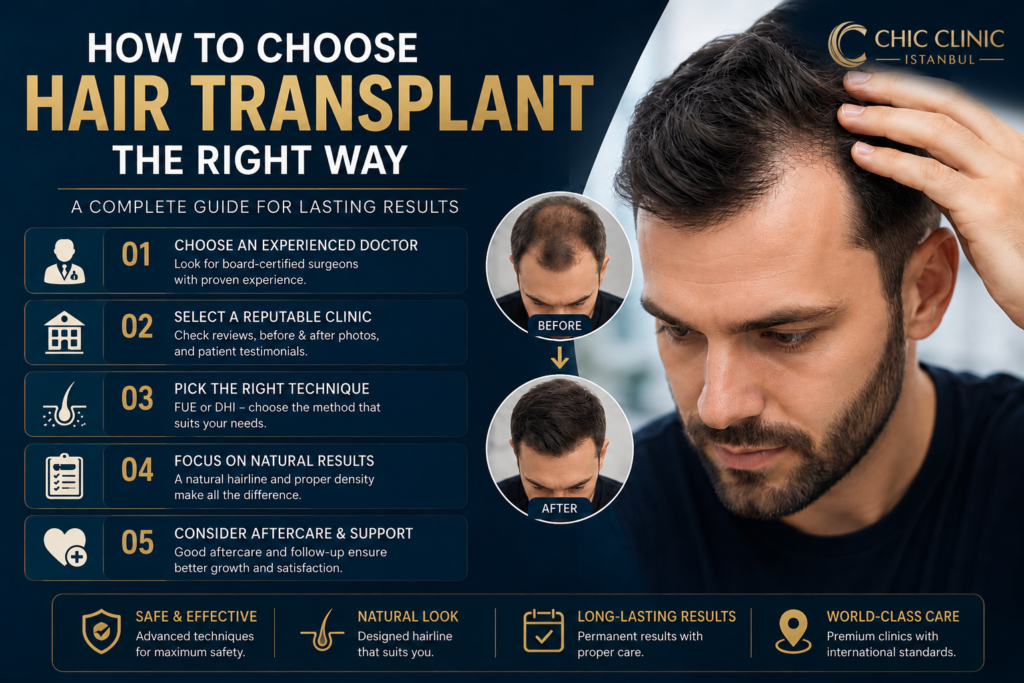
A hair transplant can look life-changing in photos and feel overwhelming the moment you start comparing clinics. If you are researching how to choose hair transplant options abroad, the real challenge is not finding offers. It is separating polished marketing from a well-organized medical experience that gives you natural results, proper planning, and support from the first message to the day you fly home.
For most patients, the best decision is not simply the cheapest package or the clinic with the most dramatic before-and-after gallery. It is the provider that evaluates your hair loss honestly, explains what is realistic for your donor area, and coordinates the process in a way that feels clear and controlled. When you are traveling internationally for treatment, that full experience matters just as much as the procedure itself.
How to choose hair transplant without guessing
Start with the one question many patients skip: am I a good candidate right now? Hair transplantation is not a one-size-fits-all fix. Your age, pattern of hair loss, donor density, scalp condition, and long-term expectations all affect the right plan. A clinic that promises a dense hairline to everyone without reviewing clear photos or discussing future hair loss is not being careful. It is selling speed.
A proper evaluation should look at the front hairline, mid-scalp, crown, and donor area. It should also consider whether your hair loss is still progressing quickly. In some cases, the best advice is to adjust the design, lower the graft count, or stage treatment over time. That kind of restraint is usually a good sign. Natural results often come from conservative planning, not aggressive promises.
The next factor is surgeon oversight. Patients often ask whether the technique matters more than the doctor. In reality, both matter, but planning matters first. FUE and DHI can both produce excellent outcomes when the case is designed well and the medical team is experienced. If the clinic focuses only on acronyms and not on who is responsible for the design, extraction, channel opening, and implantation, ask more questions.
Compare the method, but compare the planning more
FUE is widely chosen because it allows individual follicle extraction without a linear scar. It is flexible, effective, and suitable for many patients. DHI is often presented as the more premium option, and in certain cases it can help with implantation control and density work, especially in selected areas. But that does not mean DHI is automatically better for every patient.
This is where many international patients get confused. A method should match the case, not the marketing package. If your crown needs broad coverage, if your donor area is limited, or if your priority is rebuilding a natural hairline, the plan may differ even if two clinics use the same technology. The right clinic should explain why a specific method fits your goals instead of assuming you will be impressed by whichever label sounds more advanced.
It is also worth asking how many grafts you actually need and whether that number makes sense for your donor capacity. Bigger numbers can sound attractive, but overharvesting the donor area can create long-term problems. A responsible team aims for balance – good visible improvement today without damaging your options for the future.
What a strong consultation should include
If you want to know how to choose hair transplant care with confidence, pay close attention to the consultation stage. This is where serious providers separate themselves from high-volume sales operations. You should expect a review of your photos, a discussion of your goals, an explanation of expected density, and a realistic timeline for growth.
The consultation should also cover details many patients forget to ask about: who performs each step, how long the procedure takes, what the healing period looks like, when you can travel, and what aftercare support is included. If the answers are vague, rushed, or constantly redirected to price, take that as useful information.
International patients often benefit from a WhatsApp photo assessment because it makes the first step easy and fast. That convenience only helps if the review is thoughtful. A few clear photos from the front, top, sides, and back should lead to a case-based discussion, not an instant generic quote sent to everyone.
Look beyond price and read the package carefully
Hair transplant pricing abroad can be very attractive, and that is one reason Istanbul remains a leading destination. Still, cost should be compared in context. A lower quote may not include medications, aftercare products, transfers, hotel stay, translator support, or post-op follow-up. Another clinic may charge more but provide a smoother and safer patient journey.
For someone traveling from the US or another country, logistics are not a small detail. They affect stress, timing, and recovery. Airport pickup, hotel coordination, local transport, translation, and a responsive patient team can make the difference between feeling looked after and feeling stranded in an unfamiliar city after a medical procedure.
That is why many patients prefer a coordinated medical tourism provider rather than trying to piece everything together themselves. A concierge-style system creates structure. You know where you will stay, how you will get to the clinic, who to contact if you have questions, and what happens after the procedure. Chic Clinic Istanbul is built around that kind of organized support, which matters when hair restoration is part of a broader travel decision.
Red flags patients should not ignore
A good clinic does not need to pressure you. If you are pushed to book immediately, offered a dramatic discount that expires in hours, or told you can achieve unrealistic density in one session without proper assessment, slow down. Hair transplantation rewards patience more than urgency.
Another red flag is over-edited results. Before-and-after photos should show consistent angles, lighting, and timelines when possible. You also want to see healed outcomes, not only immediate post-op images with drawn hairlines and fresh graft placement. Fresh results can look impressive without telling you much about final growth.
Be cautious with clinics that avoid discussing limitations. Every case has trade-offs. A lower hairline may use more grafts. Crown coverage may require sacrificing density elsewhere. Patients with very advanced hair loss may need to prioritize framing the face rather than full restoration everywhere. Honest conversations build trust. Perfect promises usually do the opposite.
Questions worth asking before you book
Ask who designs the hairline and whether the doctor will assess your donor area directly. Ask how many grafts are recommended and why. Ask what happens if your current hair loss progresses in the next few years. Ask what aftercare is included and how follow-up works once you return home.
You should also ask to see results from patients with a similar hair type, hair loss pattern, and stage of recession. Straight hair, curly hair, fine hair, and coarse hair do not behave the same way. A clinic that understands this will not present every case as interchangeable.
Choose the experience, not just the procedure
When patients think about how to choose hair transplant treatment, they often focus on the surgery day. In reality, your experience starts much earlier and continues well after the transplant. The easiest process usually begins with a fast remote consultation, clear expectations, travel planning, and a dedicated team that answers practical questions without making you chase for information.
This matters because confidence is built through organization. When your treatment plan, airport transfer, hotel, translator support, and aftercare are all handled professionally, the entire process feels more manageable. That is especially important for first-time medical travelers who want privacy, predictability, and a clear path forward.
The right clinic should leave you feeling informed, not sold to. You should understand what can be improved, what cannot be guaranteed, and what your timeline will look like over the next 12 months. Growth takes time. A trustworthy provider prepares you for that reality instead of pretending you will see final results in a few weeks.
Hair transplantation is a personal decision, but choosing well is usually less about finding the flashiest offer and more about finding the team that plans carefully, communicates clearly, and supports you at every stage. When the medical side and the travel side are both handled with care, the process becomes much simpler – and that peace of mind is worth taking seriously before you book.