
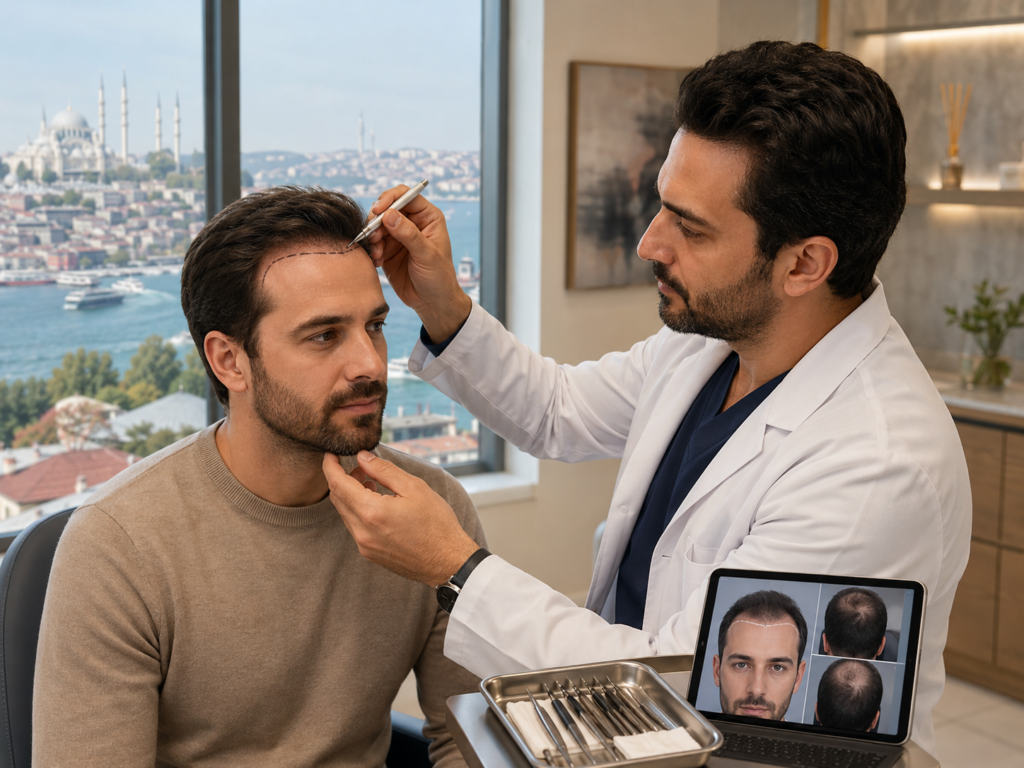
A hairline can change your whole appearance, but for most patients, the real question is not whether they want treatment. It is whether hair transplant Istanbul clinics can deliver natural results without making the process stressful. If you are comparing options from the US, that question usually comes down to three things: surgeon quality, planning, and how well your trip is organized from start to finish.
Istanbul has become one of the best-known destinations for hair restoration because it offers access to experienced teams, modern techniques, and treatment packages that are often far more affordable than what patients find at home. But price alone should never be the reason you book. A good transplant is not just about moving grafts. It is about designing a hairline that fits your age, using the donor area carefully, and making sure every step before and after the procedure is handled properly.
Why hair transplant Istanbul attracts international patients
Patients do not usually travel abroad for a haircut-level decision. They travel because hair loss affects confidence, photos, work presence, and daily self-image. Istanbul stands out because it combines medical access with a smoother treatment journey. For many international patients, that matters as much as the procedure itself.
The appeal is practical. You can often access FUE or DHI techniques with experienced hair transplant teams, while also having airport pickup, hotel arrangements, translator support, and direct communication before you fly. That structure removes a lot of the uncertainty that people worry about when considering treatment in another country.
Just as important, Istanbul is used to serving overseas patients. That means consultation systems are typically built around remote communication. In many cases, your journey starts by sending photos through WhatsApp, receiving a case review, and getting a preliminary treatment plan before you commit to travel. For patients who want a clearer path instead of endless back-and-forth, that approach feels efficient and reassuring.
What actually matters more than price
It is easy to get pulled in by low package offers. The problem is that hair transplantation has long-term consequences. If the hairline is too aggressive, the density is poorly distributed, or the donor area is overharvested, fixing those issues later can be much harder than doing the first procedure correctly.
The best decision usually comes from looking at value, not the cheapest number. You want to know who is planning the case, which technique fits your pattern of loss, how many grafts are being recommended, and whether the treatment plan makes sense for your age and future hair loss progression. A 28-year-old patient with active hair loss should not be approached the same way as a 45-year-old with a stable pattern.
That is where a well-coordinated clinic experience can make a real difference. When your case is reviewed carefully, questions are answered clearly, and logistics are managed in advance, you can focus on the quality of the treatment rather than the stress of organizing every detail yourself.
Hair transplant Istanbul techniques patients usually compare
Most international patients asking about hair transplant Istanbul options are deciding between FUE and DHI. Both can produce excellent results when used for the right patient, but they are not interchangeable in every case.
FUE
FUE, or Follicular Unit Extraction, is one of the most widely used hair transplant methods. Individual grafts are taken from the donor area, usually at the back of the head, and then implanted into thinning or bald areas. It is popular because it avoids a linear scar and works well for a broad range of patients.
FUE is often a strong option when a larger area needs coverage. It gives teams flexibility in planning the hairline, mid-scalp, and crown depending on the graft count and donor capacity. If your loss is more advanced, this may be the more practical route.
DHI
DHI, or Direct Hair Implantation, uses a specialized implantation approach that can offer more control in certain cases. It is often discussed by patients who want dense work in smaller areas, especially the front hairline or crown, although suitability always depends on the case itself.
DHI can be a good fit when the goal is precision and careful placement. That said, the technique is only as good as the team using it. It should not be treated as automatically better just because it sounds more advanced. For some patients, classic FUE will be the smarter and more efficient choice.
Who is a good candidate?
A consultation should answer this quickly and honestly. In general, good candidates are patients with enough healthy donor hair and a realistic understanding of what can be achieved. Hair transplantation improves density and shape, but it does not create unlimited grafts. Donor management is one of the biggest factors behind natural, sustainable results.
Your age, family history, pattern of loss, hair texture, and medical background all matter. So does timing. Some patients are ready now, while others may be better served by stabilizing ongoing loss first or adjusting expectations about coverage. A trustworthy assessment should never promise a teenage hairline to everyone.
If you wear your hair short, you may also care more about donor-area visibility during healing. If your crown is your main concern, you may need a discussion about whether enough grafts remain for the front and mid-scalp too. These are not small details. They shape the final outcome.
What the patient journey should look like
For international patients, treatment quality and travel quality go together. The process should feel organized from the first message.
It usually begins with sending clear photos of your front, top, sides, back donor area, and hairline under good lighting. Based on those photos, you should receive an initial evaluation, estimated graft range, and a recommendation on technique. This stage is valuable because it helps you understand whether the plan feels medically reasonable before you book anything.
Once you move forward, the next step should be coordination. Flights, hotel stay, airport transfers, clinic scheduling, and translator support should not feel like afterthoughts. A concierge-style service is especially useful for patients who want to travel confidently without worrying about language barriers or local logistics.
That is one reason many patients choose a coordinated provider such as Chic Clinic Istanbul. The experience is built around guided care, not just the procedure day. For overseas patients, that level of structure can make a major difference in comfort and peace of mind.
Recovery and when results show
Hair transplantation requires patience. Right after the procedure, redness, scabbing, and mild swelling are normal. The first several days are about protecting the grafts and following washing instructions exactly. Most patients are back to light routine activity fairly quickly, but the treated area still needs careful handling.
One of the most common concerns is shedding. Newly transplanted hairs often fall out in the early phase before regrowth starts. That does not mean the transplant failed. It is part of the normal cycle. Visible growth usually begins after a few months, with more meaningful improvement developing over time. Final results are not immediate, and patients who understand that tend to feel much more relaxed during recovery.
The timeline can vary. Hairline work may show differently from crown work, and individual growth speed is never identical from one patient to another. What matters is having proper aftercare guidance and a team you can contact if you have questions after you return home.
Questions worth asking before you book
A good clinic should be comfortable answering direct questions. Ask who evaluates your case, what technique is recommended and why, how many grafts are being proposed, and what the recovery protocol looks like. Ask about donor preservation, not just density in the front. Ask what kind of support you receive before arrival and after departure.
You should also pay attention to whether the consultation feels rushed or thoughtful. If every patient seems to be offered the same graft number and the same promise, that is a warning sign. Hair restoration is personal. A serious provider should treat it that way.
The strongest hair transplant decision is usually not the fastest one. It is the one where the medical plan makes sense, the expected result is realistic, and the entire travel experience feels professionally managed.
Choosing treatment abroad can feel like a big step, but it becomes much easier when the path is clear, the communication is consistent, and the support is already in place before you board your flight.