
Introduction
Lymphatic massage after liposuction can be an important part of postoperative care for selected patients. After liposuction, tummy tuck, and certain other cosmetic surgeries, swelling and temporary fluid accumulation in the tissues are normal parts of the healing process.
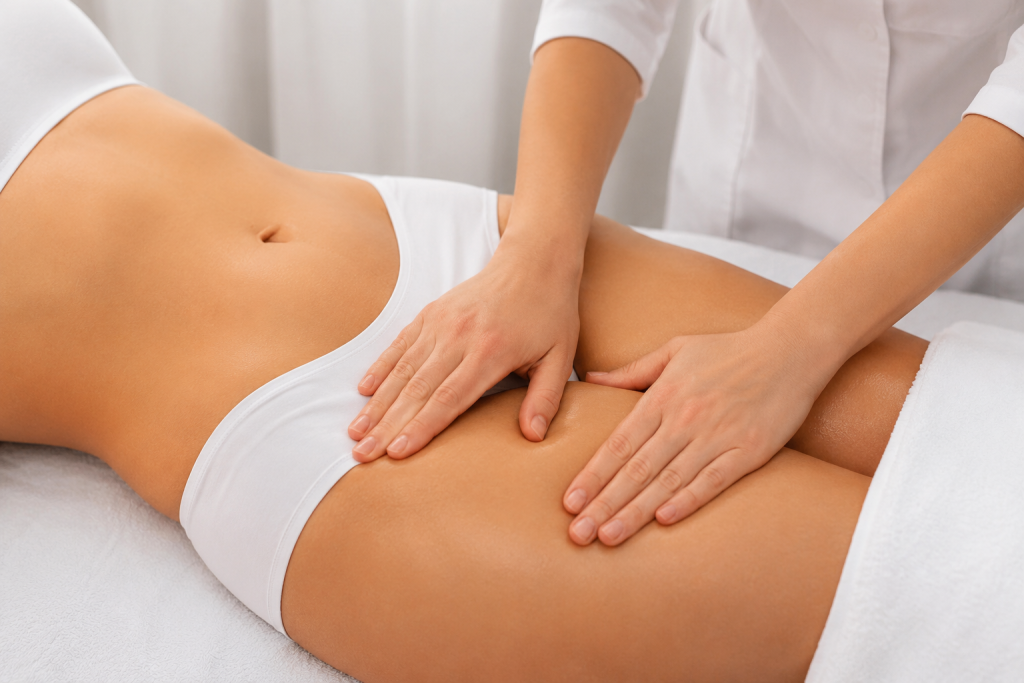
Lymphatic massage, more specifically known as Manual Lymphatic Drainage (MLD), is different from regular or deep-tissue massage. It uses gentle, rhythmic, controlled movements designed to encourage the movement of lymphatic fluid.
For some patients, lymphatic drainage may help manage postoperative swelling and make the recovery period more comfortable. However, it should be performed at the appropriate time and according to the surgeon’s recommendations.
Why Does Swelling Occur After Liposuction?
During liposuction, a thin tube called a cannula is moved through the fatty tissue to remove unwanted fat. This process naturally causes a temporary inflammatory response in the treated tissues.
As a result, during the first days and weeks after surgery, patients may experience:
- Swelling
- Bruising
- Tightness
- Tenderness
- Temporary numbness
- Firm or uneven areas beneath the skin
These changes do not necessarily represent the final result of liposuction. The body needs time to heal and eliminate excess fluid.
The lymphatic system plays an important role in transporting excess interstitial fluid. This is one reason why Manual Lymphatic Drainage is sometimes included in postoperative care following liposuction.
What Is Lymphatic Massage?
Manual Lymphatic Drainage (MLD) is a specialized massage technique designed to encourage the movement of lymphatic fluid through the body’s lymphatic pathways.
Unlike deep-tissue massage, MLD generally involves light, slow and rhythmic movements.
This distinction is particularly important after cosmetic surgery because recently operated tissues may be sensitive.
A proper lymphatic massage should therefore not simply involve aggressively pressing or kneading the surgical area.
Benefits of Lymphatic Massage After Liposuction
1. Helping Reduce Postoperative Swelling
One of the main reasons for using lymphatic massage after liposuction is to help manage postoperative edema.
Fluid can temporarily accumulate between tissues following surgery. Gentle lymphatic drainage is intended to encourage the movement of this fluid through the lymphatic system.
For some patients, this may contribute to a more comfortable recovery while postoperative swelling gradually decreases.
2. Helping With Fluid Accumulation
After extensive liposuction procedures such as Lipo 360, several areas of the body may be treated during the same operation.
This can lead to considerable swelling during the early recovery period.
Manual Lymphatic Drainage may be recommended as one component of postoperative care to support the body’s natural process of managing excess tissue fluid.
3. Reducing the Feeling of Tightness
Some patients describe the treated areas as hard, tight or heavy during the first weeks after liposuction.
Part of this sensation may be related to swelling and the normal healing response of the tissues.
As edema decreases, these sensations generally improve. Appropriate postoperative massage may help some patients feel more comfortable during this phase.
4. Possible Role in Managing Post-Liposuction Fibrosis
Another concern following liposuction is the development of firm or irregular areas beneath the skin.
Postoperative tissue changes and fibrosis can contribute to this firmness.
Some postoperative rehabilitation protocols incorporate Manual Lymphatic Drainage and other treatments to help manage edema and tissue firmness. However, lymphatic massage should not be presented as a guaranteed method for preventing or eliminating fibrosis.
Persistent lumps, significant asymmetry or unusual firmness should be evaluated by the surgeon.
Does Lymphatic Massage Improve Liposuction Results?
Lymphatic massage should not be considered a technique that actually “creates” the result of liposuction.
The final result of surgery depends primarily on factors such as:
- Surgical technique
- Amount and distribution of fat removed
- Patient’s anatomy
- Skin quality and elasticity
- Healing process
- Postoperative care
- Compression garment use when recommended
- Maintaining a stable body weight
Lymphatic drainage is primarily a postoperative recovery measure. Its purpose is to help manage swelling and support recovery rather than replace good surgical technique.
After Which Cosmetic Surgeries Can Lymphatic Massage Be Used?
Depending on the procedure and the surgeon’s recommendations, lymphatic drainage may be considered after procedures such as:
- Classic Liposuction
- VASER Liposuction
- Lipo 360
- Tummy Tuck combined with liposuction
- BBL combined with liposuction
- Arm liposuction
- Thigh liposuction
- Certain body contouring procedures
Not every patient requires exactly the same postoperative massage protocol.
When Should Lymphatic Massage Start After Liposuction?
There is no single starting day that is appropriate for every patient.
The correct timing depends on factors such as:
- Type of surgery
- Number and size of treated areas
- Amount of liposuction performed
- Condition of the incisions
- Presence of drains
- Degree of swelling
- Patient’s overall health
- Surgeon’s postoperative protocol
For this reason, patients should not independently decide to begin aggressive massage immediately after surgery.
Lymphatic massage should begin only when the surgeon considers it appropriate.
How Many Lymphatic Massage Sessions Are Needed?
There is no universal number of sessions for every patient.
Some patients may require only a limited number of sessions, while others undergoing more extensive body contouring procedures may be advised to have additional sessions.
The appropriate number depends on the patient’s swelling, healing progress, extent of surgery and recommendations of the surgical team.
Therefore, statements such as “every liposuction patient needs exactly 10 or 20 sessions” are overly simplistic.
Postoperative care should be individualized.
Should Lymphatic Massage Hurt?
Generally, Manual Lymphatic Drainage should be gentle rather than aggressive.
More pressure does not automatically mean a better lymphatic massage.
Recently operated tissues can be sensitive, and forceful massage may cause unnecessary pain or tissue irritation.
This is why postoperative lymphatic massage should preferably be performed by a professional who understands Manual Lymphatic Drainage and postoperative body-contouring care.
Can You Perform Lymphatic Massage at Home?
Patients should not begin strongly massaging or pressing the surgical areas without appropriate instructions.
The correct direction of movement, amount of pressure and areas that should or should not be manipulated can vary depending on the surgery.
If the surgeon approves, a trained professional may teach the patient simple and appropriate techniques that can safely be performed at home.
Lymphatic Massage and Compression Garments
Lymphatic massage and compression garments are not the same thing, but both may be included in postoperative care following liposuction.
A compression garment may be recommended to help control swelling and support the treated tissues during recovery.
The type of garment and how long it should be worn depend on the procedure and the surgeon’s protocol.
Patients should therefore follow their surgeon’s instructions rather than tightening the garment excessively or wearing additional compression without medical advice.
Lymphatic Massage After VASER Liposuction
VASER uses ultrasound energy to assist in the treatment of fatty tissue before it is removed.
Although the technology differs from traditional liposuction, swelling still occurs during recovery.
For this reason, lymphatic massage after VASER liposuction may also be included in the postoperative care plan for selected patients.
The timing and frequency should again be determined according to the surgeon’s assessment.
Lymphatic Massage After Lipo 360
Lipo 360 generally involves circumferential body contouring, with areas such as the abdomen, waist, flanks and back treated during the same surgical plan.
Because several areas may be treated, postoperative swelling can be more extensive.
In these cases, Manual Lymphatic Drainage may be recommended as part of the recovery program to help manage swelling and improve patient comfort.
Lymphatic Massage After BBL
During a Brazilian Butt Lift (BBL), fat is generally removed from selected areas by liposuction, processed and transferred to the buttocks.
Postoperative massage must therefore be approached carefully.
The liposuction areas and the fat-transfer area do not necessarily receive the same postoperative treatment. Patients should never assume that pressure appropriate for the abdomen or flanks is also appropriate over newly transferred fat.
The surgeon’s specific postoperative instructions must be followed.
When Should Massage Be Avoided?
If a patient develops unusual symptoms after surgery, massage should not be used as a substitute for medical assessment.
The surgical team should be contacted promptly in cases such as:
- Fever
- Increasing or spreading redness
- Abnormal wound discharge
- Severe or suddenly worsening pain
- Unusual one-sided leg swelling
- Shortness of breath
- Chest pain
- Suspected infection or blood clot
- Any unexpected postoperative deterioration
These symptoms require medical evaluation rather than additional massage.
Is Lymphatic Massage Necessary for Everyone After Liposuction?
No.
Although lymphatic massage after liposuction is widely used in postoperative care, it does not mean that every patient must undergo exactly the same massage program.
Some patients may benefit from Manual Lymphatic Drainage, while others may require a different recovery protocol.
The decision depends on the type of procedure, amount of swelling, individual healing process and surgeon’s recommendations.
Conclusion
Lymphatic massage after liposuction can be a useful part of postoperative care for appropriately selected patients. Manual Lymphatic Drainage uses gentle and controlled movements to encourage lymphatic fluid movement and may help manage swelling and discomfort during recovery.
However, lymphatic massage is not a substitute for proper surgery, medical follow-up or other postoperative instructions. It should not be excessively painful or aggressive, and the appropriate time to begin and number of sessions can vary from one patient to another.
Following the surgeon’s instructions, using compression garments when prescribed, maintaining appropriate hydration and nutrition, staying active according to medical advice, and attending postoperative follow-up appointments are all important parts of recovery after liposuction and cosmetic surgery.