
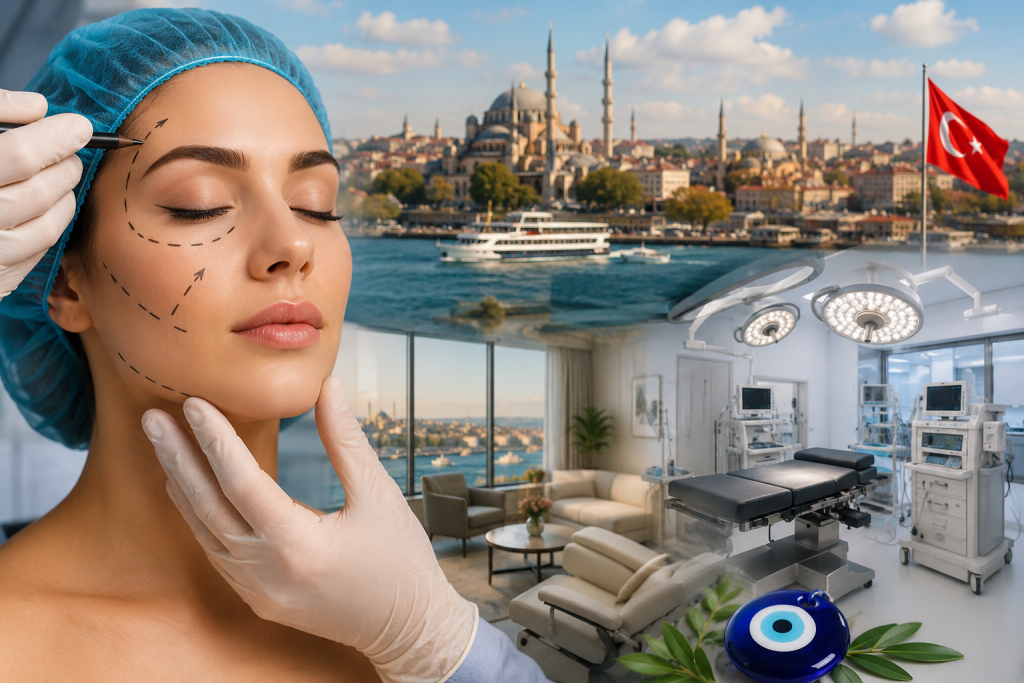
Cosmetic surgery in Turkey has become one of the world’s most popular choices for international patients seeking high-quality aesthetic procedures at competitive prices.
Turkey has become one of the world’s most popular destinations for cosmetic and plastic surgery. Every year, thousands of international patients travel to cities such as Istanbul to undergo procedures including rhinoplasty, liposuction, tummy tuck, breast surgery, facelift, hair transplantation, and bariatric surgery.
Affordable prices are certainly an important reason for this popularity, but cost alone does not explain why so many patients choose Turkey. The country offers a valuable combination of experienced surgeons, extensive practical expertise, modern medical facilities, internationally manufactured equipment, and services designed specifically for patients arriving from abroad.
Cosmetic Surgery Is Both a Science and a Practical Art
Cosmetic surgery is based on medical science, anatomy, diagnosis, surgical planning, and patient safety. However, theoretical knowledge alone is not sufficient to produce an attractive and natural-looking result.
Surgery is also a highly practical profession that requires excellent manual ability, precision, coordination, patience, and attention to detail. In this sense, it has certain similarities with traditional crafts such as carpet weaving, sculpture, woodwork, jewellery making, and other forms of fine manual art.
A surgeon may have strong theoretical knowledge, but they must also be capable of controlling their hands accurately, working delicately with tissues, creating balanced proportions, and adapting the surgical technique to the individual anatomy of each patient.
The best cosmetic surgeons combine scientific knowledge with strong manual skills and an artistic understanding of the human body.
A Strong Tradition of Art and Craftsmanship
Turkey and the surrounding region have a long tradition of architecture, decorative arts, carpet weaving, ceramics, metalwork, calligraphy, and other highly detailed crafts. These traditions demonstrate a deep cultural appreciation for symmetry, proportion, patience, and careful manual work.
Naturally, this cultural background does not automatically make every doctor a skilled surgeon. Nevertheless, the importance given to craftsmanship, practical skill, and visual harmony is also reflected in many surgical fields in Turkey.
Cosmetic surgery requires more than simply performing a medical procedure. A successful surgeon must understand facial and body proportions and know how to create an improvement without producing an exaggerated or unnatural appearance.
This combination of medical training, practical ability, and aesthetic vision is one of the reasons Turkish surgeons have developed a strong international reputation.
More Procedures Mean More Practical Experience
Experience is one of the most important factors when choosing a cosmetic surgeon. A doctor who regularly performs a specific operation becomes increasingly familiar with different body types, anatomical variations, surgical challenges, and possible complications.
Because Turkey receives a very high number of international patients, many surgeons perform cosmetic procedures much more frequently than doctors working in countries where demand is lower.
For example, a surgeon in another country may perform a particular procedure around ten times per month, while an experienced surgeon in Turkey may perform the same procedure thirty times or more. Over the course of several years, this difference can result in hundreds of additional operations.
A higher surgical volume can help a surgeon refine techniques, improve decision-making, recognise potential difficulties earlier, and achieve more consistent results. However, patients should still consider the surgeon’s qualifications, specialisation, before-and-after photographs, hospital conditions, and approach to safety rather than focusing only on the number of operations.
European-Standard Technology at More Affordable Prices
Many hospitals and clinics in Turkey use medical equipment, implants, surgical instruments, anaesthesia systems, sterilisation technology, and medical materials produced in countries such as Germany, Italy, Spain, the United Kingdom, and the United States.
Therefore, the lower cost of cosmetic surgery in Turkey does not necessarily mean that cheaper or outdated technology is being used. In many cases, the medical products and equipment are identical or comparable to those used in European hospitals.
The main difference lies in the overall operating costs. Salaries, property expenses, accommodation, transportation, and many everyday costs are lower in Turkey than in Western Europe. Turkey also uses the Turkish lira rather than the euro or British pound.
These economic differences allow hospitals and clinics to provide treatment at more competitive prices while continuing to use modern medical technology.
Why Is Cosmetic Surgery Cheaper in Turkey?
The cost of a cosmetic procedure includes much more than the surgeon’s fee. It may also include the hospital, operating room, anaesthesia team, nurses, medical tests, implants or surgical materials, medication, accommodation, transportation, and administrative services.
In Western European countries, each of these services is calculated according to much higher local expenses. This significantly increases the final price paid by the patient.
In Turkey, lower operating and living costs make it possible to offer the same type of procedure at a more accessible price. Therefore, the difference in price is largely related to the economy and local currency rather than an automatic difference in medical quality.
Still, patients should be cautious of offers that appear unrealistically cheap. Safe surgery requires a qualified surgeon, a properly equipped hospital, an experienced anaesthesia team, genuine medical products, preoperative tests, and reliable postoperative care.
The cheapest option is not always the safest or most economical choice in the long term.
Modern Hospitals and International Safety Standards
Turkey has invested heavily in private hospitals, medical technology, and health tourism. Many cosmetic procedures are performed in modern hospitals with advanced operating rooms, sterilisation systems, intensive care facilities, laboratory services, and professional anaesthesia teams.
Patient safety should always remain more important than price. Before choosing a clinic, international patients should confirm where the procedure will be performed, whether the surgeon is appropriately qualified, what tests are required, and what medical support will be available after surgery.
A responsible clinic should evaluate the patient’s medical history, current medications, previous operations, allergies, smoking habits, body mass index, and expectations before confirming the surgery.
Not every patient is suitable for every procedure. Sometimes the safest medical decision is to postpone an operation, request additional examinations, or recommend a different treatment.
Services Designed for International Patients
Another reason patients choose Turkey is the convenience of organised medical tourism services. Travelling to another country for surgery can initially seem complicated, particularly when the patient does not speak the local language.
Many Turkish clinics provide packages that may include:
- Online consultation before travelling
- Preliminary evaluation by the surgeon
- Airport and hospital transfers
- Hotel or hospital accommodation
- Translation and patient coordination
- Preoperative medical examinations
- Medication required during the hospital stay
- Postoperative checks and follow-up support
Having these services organised by one team can make the entire experience easier and less stressful. Patients know who will meet them at the airport, where they will stay, when their tests will be performed, and how they will communicate with the medical team.
A Wide Range of Procedures in One Destination
Turkey offers a broad range of cosmetic and reconstructive procedures. International patients commonly travel to Turkey for:
- Rhinoplasty
- Facelift and neck lift
- Eyelid surgery
- Breast augmentation, lift, or reduction
- Liposuction and body contouring
- Tummy tuck
- Brazilian butt lift
- Arm lift and thigh lift
- Hair transplantation
- Dental treatments and smile design
- Weight-loss surgery
Some patients also choose to combine suitable procedures during one trip. However, combining operations must always be approved by the surgeon and anaesthesiologist. The total duration of surgery, the patient’s general health, recovery requirements, and risk of complications must all be considered.
More surgery in one session is not always better. A safe and realistic treatment plan is more important than completing every desired procedure in a single visit.
High Competition Encourages Better Service
The cosmetic surgery sector in Turkey is highly competitive. Clinics and surgeons work with patients from many different countries and depend heavily on their reputation, patient satisfaction, reviews, and before-and-after results.
This competition encourages many providers to invest in better hospitals, newer technology, multilingual personnel, patient coordination, and postoperative support.
At the same time, the large number of clinics can make choosing the right provider difficult. Patients should not base their decision only on social media advertising, a low price, or a salesperson’s promises.
A reliable clinic should clearly explain the expected result, limitations of the procedure, possible risks, recovery period, hospital conditions, and what is included in the treatment package.
How to Choose a Cosmetic Surgery Clinic in Turkey
Before making a final decision, patients should consider several important questions:
Is the surgeon experienced in the specific procedure you need? Will the operation be performed in a fully equipped hospital? Are preoperative tests included? Who will administer the anaesthesia? What type of implant or medical product will be used? How long should you stay in Turkey after surgery? What postoperative support is provided after you return home?
Patients should also provide honest information about their health. Hiding medical conditions, medication use, smoking, previous complications, or other relevant details can increase surgical risks.
Good communication between the patient, surgeon, and clinic is essential for safe treatment and realistic expectations.
Conclusion
Turkey’s success in cosmetic surgery is not based on one single advantage. It is the result of several factors working together: skilled surgeons, a high number of procedures, extensive practical experience, modern hospitals, internationally manufactured medical equipment, competitive costs, and services developed for overseas patients.
Cosmetic surgery is both a medical science and a manual art. Scientific knowledge protects the patient, while practical skill and aesthetic judgement help create balanced and natural-looking results.
For patients who carefully select a qualified surgeon and a reputable clinic, Turkey can provide high-quality cosmetic treatment at a considerably more affordable cost than many Western European countries.