
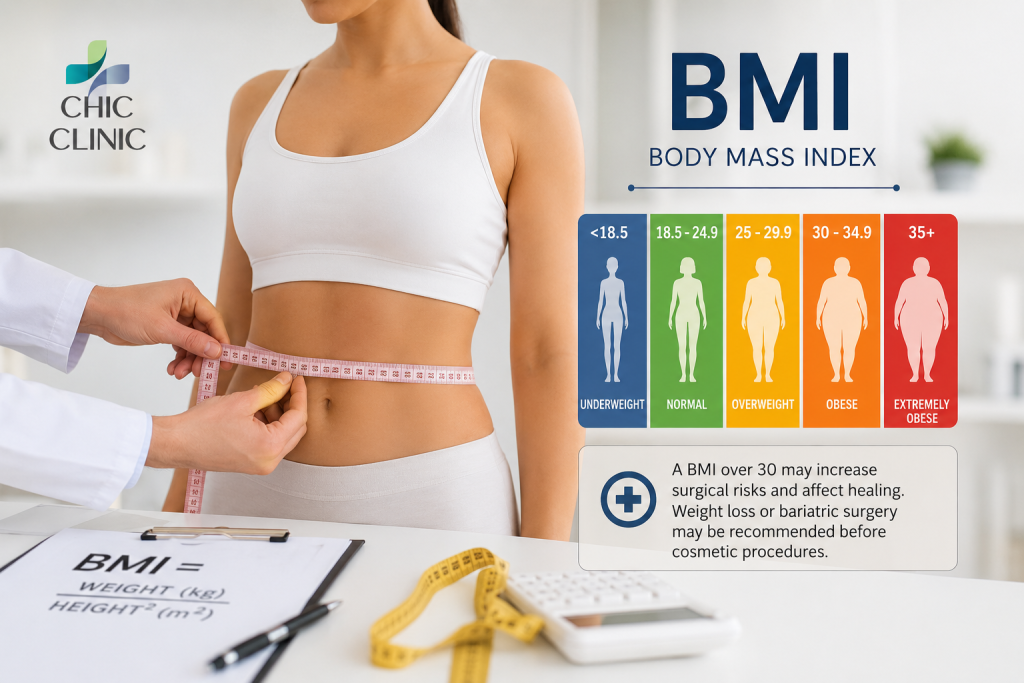
BMI before cosmetic surgery is one of the first factors doctors evaluate to understand whether a patient is suitable for aesthetic surgery.
When patients consider cosmetic surgery, they usually focus on the final result: a flatter abdomen, a more defined body shape, lifted breasts, or improved body proportions. However, before planning any aesthetic procedure, one of the first medical factors that should be evaluated is BMI, also known as Body Mass Index.
BMI is an important indicator that helps doctors understand whether a patient’s weight is suitable for surgery. It is calculated using a person’s height and weight. For this reason, when you contact our team for a cosmetic surgery consultation, one of the first things we ask after your age is your height and weight. This allows us to estimate your BMI and understand whether cosmetic surgery is a safe and suitable option for you.
What Is BMI?
BMI stands for Body Mass Index. It is a simple measurement used to estimate whether a person is underweight, normal weight, overweight, or obese according to their height and weight.
Although BMI does not show the full picture of a person’s health, it is still a useful first step in surgical planning. It helps the medical team evaluate possible risks, especially before procedures such as tummy tuck, liposuction, breast surgery, arm lift, thigh lift, or other body contouring operations.
Why Is BMI Important for Cosmetic Surgery?
Cosmetic surgery is not only about appearance. It is also about safety, healing, and long-term results. Patients with a high BMI may have a higher risk of complications during and after surgery.
If your BMI is above 30, you may not be the best candidate for certain cosmetic procedures at that moment. This does not mean that surgery is impossible forever. It simply means that your body may need to be prepared first.
In many cases, patients with a BMI over 30 are advised to lose weight before cosmetic surgery. Reaching a BMI closer to 30 or below can help reduce surgical risks and improve the healing process.
High BMI and Wound Healing
One of the main concerns with high BMI is wound healing. Patients with obesity may have a higher risk of delayed wound healing, infection, fluid accumulation, and poor scar quality.
After cosmetic surgery, the body needs proper blood circulation, oxygen supply, and stable metabolism to heal well. In patients with excess body fat, this healing process may become more difficult. The tissues may not recover as quickly, and the risk of wound-related problems may increase.
This is especially important in surgeries that involve larger incisions, such as tummy tuck, breast reduction, arm lift, or thigh lift.
BMI, Blood Sugar, and Surgical Risk
Another important point is blood sugar. Many patients with obesity may also have higher blood sugar levels or insulin resistance, even if they have not been diagnosed with diabetes.
Higher blood sugar can affect wound healing and increase the risk of infection after surgery. This is why doctors may ask for blood tests before approving a patient for cosmetic surgery. The goal is not only to create a beautiful result, but also to make sure the patient can heal safely.
What Happens If Your BMI Is Above 30?
If your BMI is above 30, there are usually two possible paths.
The first option is weight loss before cosmetic surgery. If you are able to lose weight through diet, exercise, and medical guidance, your BMI may decrease to a safer level. Once your weight becomes more stable and your BMI improves, cosmetic surgery may become a better option.
The second option may be bariatric surgery, such as gastric sleeve surgery, especially if your BMI is significantly high or if weight loss has been difficult for you. In these cases, it may be better to treat obesity first before planning cosmetic procedures.
For some patients, choosing gastric sleeve surgery first can be a life-changing step. After significant weight loss and weight stabilization, body contouring procedures such as tummy tuck, arm lift, breast lift, or thigh lift may be considered later.
Cosmetic Surgery or Gastric Sleeve: Which Comes First?
This depends on your BMI, your health condition, your weight history, and your goals.
If you only need to lose a small amount of weight, your surgeon may recommend weight loss before cosmetic surgery. However, if you have obesity and your BMI is clearly above the safe range for aesthetic surgery, bariatric surgery may be a more appropriate first step.
Cosmetic surgery is designed to reshape the body. It is not a weight loss treatment. Procedures such as liposuction or tummy tuck can improve body contour, but they cannot replace proper weight loss or obesity treatment.
That is why patients with a high BMI may be advised to focus on weight reduction first. This helps create safer conditions for surgery and can also lead to better aesthetic results in the future.
Why We Ask for Your Age, Height, and Weight
During the first consultation, we ask patients for basic information such as age, height, weight, medical history, previous surgeries, and current medications. These details help us understand your general health and whether you may be suitable for the procedure you are interested in.
Your height and weight are especially important because they allow us to calculate your BMI. Based on this number, the medical team can give you more realistic and responsible guidance.
If your BMI is within a suitable range, we can continue evaluating the procedure you want. If your BMI is high, we may recommend weight loss, further medical tests, or a different treatment plan.
Safety Comes Before Aesthetic Results
At Chic Clinic Istanbul, our priority is not only to help patients achieve their desired appearance, but also to guide them safely. A good cosmetic result starts with proper patient selection, realistic expectations, and careful medical planning.
If your BMI is high, delaying cosmetic surgery may feel frustrating. However, this decision is often made to protect your health and improve your final result.
Preparing your body before surgery can make the procedure safer, the recovery smoother, and the outcome more satisfying.
Final Thoughts
BMI is one of the most important factors in cosmetic surgery planning. If your BMI is above 30, you may need to lose weight before having aesthetic surgery, or you may need to consider bariatric surgery such as gastric sleeve first.
Every patient is different. The best decision should be made after a personal consultation and medical evaluation. By understanding your BMI, your health condition, and your goals, the medical team can help you choose the safest and most suitable treatment path.