
A rhinoplasty result stays with you every time you look in the mirror. That is why learning how to choose rhinoplasty clinic is not a small detail in your planning process – it is the decision that shapes your safety, your experience, and your final outcome.
For international patients, the stakes can feel even higher. You are not only choosing a surgeon. You are also choosing a system around that surgeon: the consultation process, the honesty of the clinic, the language support, the travel coordination, and the quality of aftercare once you are far from home. A good clinic makes the journey feel organized. A poor one can make even a simple process stressful.
If you are considering treatment in Turkey, you can also explore our Rhinoplasty in Istanbul page for more information about the procedure and treatment process.
How to choose rhinoplasty clinic without relying on price alone
Many patients begin with price, and that is understandable. Traveling abroad for rhinoplasty is often driven by value. But the cheapest quote is rarely the smartest shortcut. If a clinic leads with a low number and gives very little detail about the surgeon, hospital standards, recovery planning, or revision policy, that is a sign to slow down.
A well-run rhinoplasty clinic should explain what is included and what is not. You should know whether your package covers consultation, surgery, anesthesia, medications, accommodation, transfers, translation support, and follow-up. Transparent pricing is reassuring. Vague pricing usually creates problems later.
The better question is not, “What is the cheapest option?” It is, “What level of care am I receiving for this price?” That shift alone helps patients make more confident decisions.
Start with the surgeon, not the social media feed
Beautiful Instagram content can attract attention, but rhinoplasty is not a branding exercise. It is one of the most technique-sensitive cosmetic procedures, and results depend heavily on the surgeon’s judgment, experience, and ability to match the operation to your anatomy.
Ask who will actually perform your surgery. Look for a surgeon with specific experience in rhinoplasty rather than a general cosmetic profile that treats nose surgery as one item on a long menu. Rhinoplasty requires both functional and aesthetic planning, especially if your nose has structural issues, breathing concerns, thick skin, asymmetry, or a history of previous trauma.
Before-and-after photos are useful, but they need context. A strong clinic should be able to show consistent results across different nose shapes, face types, and patient goals. If every result looks identical, that is not always a strength. Good rhinoplasty should suit the face, not force every patient into one standard nose.
Ask about revision experience and difficult cases
This is where experience becomes more revealing. A surgeon who only discusses easy cosmetic refinements may not be the best fit if your case is more complex. If you have had previous nasal surgery, a deviated septum, breathing problems, or significant asymmetry, mention that early.
An experienced clinic will not rush to promise perfection. It will explain what is realistic, what is limited by your anatomy, and whether your goals are achievable in one surgery. That kind of honesty is worth more than a sales pitch.
Pay close attention to the consultation process
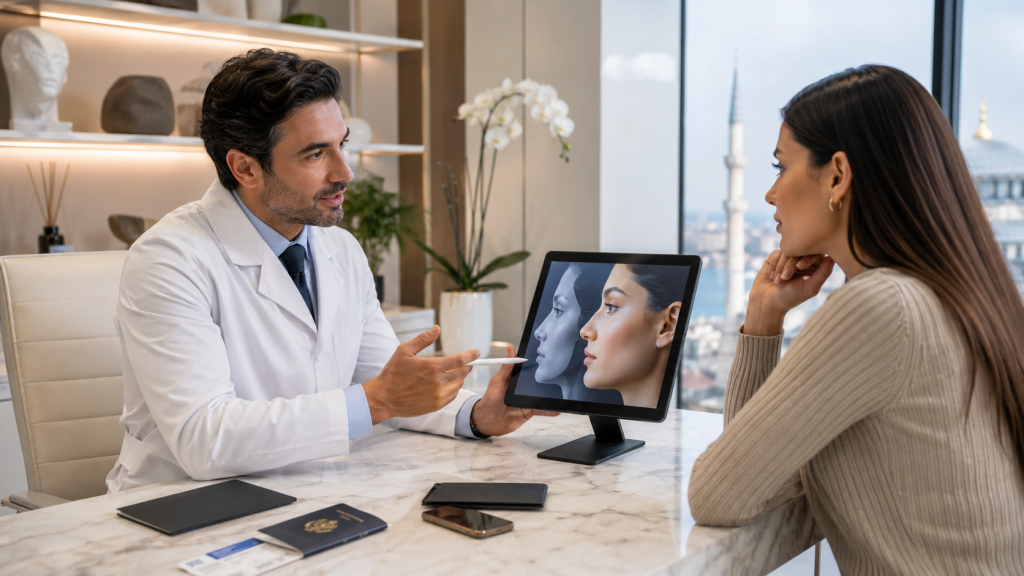
A good rhinoplasty journey often starts with a detailed remote consultation, especially for overseas patients. This first step tells you a lot about the clinic’s standards.
If the team asks for clear facial photos from multiple angles, medical history, prior surgery details, and a description of your goals, that is a positive sign. It shows the case is being reviewed properly rather than priced blindly. Many international patients prefer the convenience of WhatsApp consultation because it keeps the process quick and personal, but convenience should still come with structure.
You should feel that someone is evaluating your case, not just processing a booking. The clinic should answer practical questions clearly, explain the expected recovery timeline, and tell you how long you need to stay in the country. If answers are rushed or generic, that often reflects what the rest of the journey will feel like.
Red flags during consultation
Some warning signs appear before you ever book. Be cautious if the clinic avoids naming the surgeon, guarantees perfect results, pressures you to pay immediately, or responds vaguely when you ask about aftercare. Another red flag is heavy focus on hotel luxury while medical answers stay thin. Comfort matters, but concierge service should support quality care, not distract from it.
Look beyond the operating room
When patients research how to choose rhinoplasty clinic abroad, they often focus on surgery day alone. In reality, your experience includes airport pickup, hotel stay, translator support, pre-op testing, post-op checkups, and communication after you return home.
This is especially important if you are traveling from the US or another foreign market. You may be recovering in a country you do not know, and that makes coordination a real part of patient safety. A clinic with organized transfers, English-speaking support, and a clear schedule helps reduce anxiety at every stage.
That is one reason many patients prefer a coordinated medical tourism model. When the same team manages consultation, scheduling, travel planning, and recovery logistics, the process feels less fragmented. Chic Clinic Istanbul is one example of the kind of concierge-style support international patients often look for when they want both surgical access and guided travel assistance.
Reviews matter, but read them intelligently
Patient reviews can be helpful, but they should be read with balance. Do not stop at star ratings. Look for comments that mention communication, honesty, cleanliness, staff responsiveness, recovery support, and whether expectations matched the final experience.
The most useful reviews are specific. They describe how the clinic handled questions, airport transfers, language needs, swelling concerns, and post-op follow-up. Generic praise is nice, but detailed feedback is more reliable.
Also remember that rhinoplasty results take time. An early review written a few days after surgery may reflect hospitality more than outcome. That does not make it useless, but it means you should combine it with surgeon credentials, case photos, and consultation quality.
Ask how aftercare works once you fly home
This is one of the most overlooked parts of how to choose rhinoplasty clinic. Nose surgery recovery does not end when your cast comes off. Swelling changes gradually, and questions often come up after you return home.
Ask who you contact if you are concerned about swelling, congestion, healing, or appearance. Will the clinic stay in touch through WhatsApp? Will you send progress photos? Will the surgeon review your recovery remotely? A well-organized clinic should have a clear post-op communication plan for international patients.
You should also ask about revision policy in realistic terms. No ethical clinic should casually promise free corrections, because revision surgery depends on healing, timing, and case specifics. But the clinic should explain how concerns are evaluated if the result does not develop as expected.
Choose a clinic that matches your goals
Not every patient wants the same result, and not every clinic is equally strong at delivering every style. Some patients want a subtle refinement that keeps their natural identity. Others want a more noticeable profile change. Some prioritize breathing improvement as much as appearance.
That is why alignment matters. The right clinic for you is not simply the most famous or the most affordable. It is the one that understands your goals, communicates honestly, and shows results that feel compatible with your facial structure and expectations.
If a clinic keeps steering you toward a nose shape you did not ask for, pay attention. If it listens carefully, explains trade-offs, and helps you understand what suits your features, that is a much stronger sign.
The best choice should feel clear, not rushed
A trustworthy rhinoplasty clinic does not need to force your decision. It should make you feel informed, supported, and confident enough to move forward at the right pace. You should know who your surgeon is, what your package includes, how your travel will be handled, and what recovery support looks like after surgery.
When you find a clinic that combines surgical experience with organized patient care, the whole process becomes easier to trust. And if you are traveling abroad for a procedure this personal, peace of mind is not a bonus – it is part of the treatment itself.
Take your time, ask direct questions, and choose the team that makes you feel looked after before you even arrive. That early experience usually tells you exactly how the rest of the journey will be handled.