
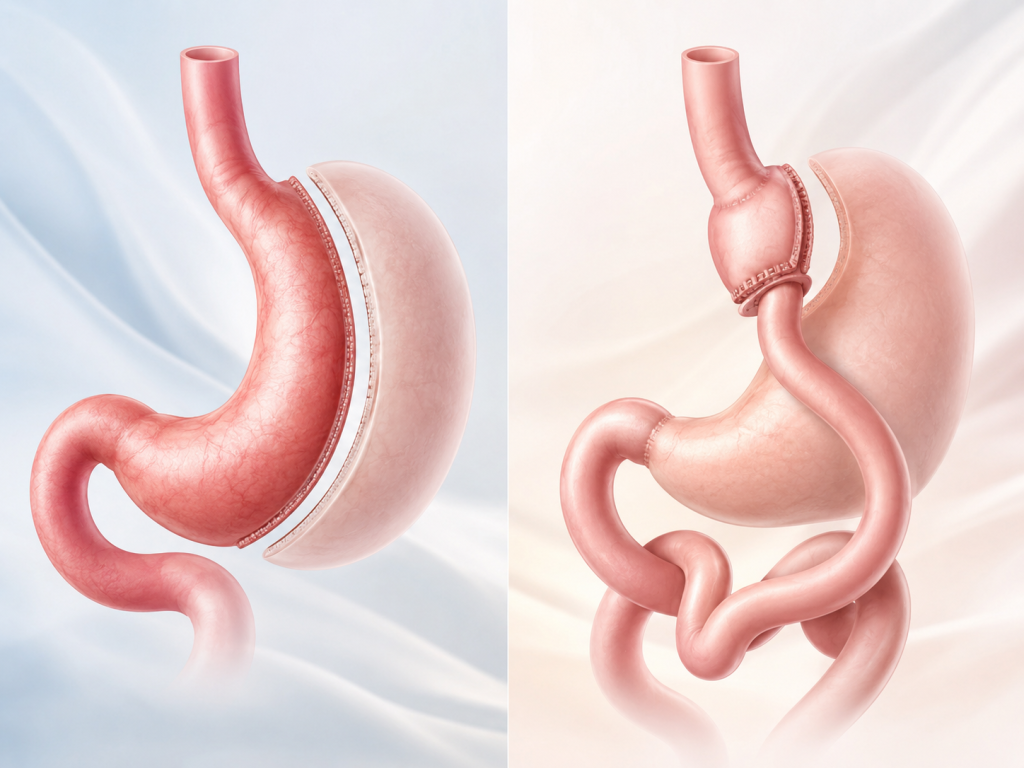
Choosing between two life-changing surgeries is rarely just about the procedure itself. When patients ask about gastric sleeve vs bypass, they are usually asking a bigger question: which option gives me the safest, most realistic path to lasting weight loss, better health, and a smoother recovery abroad?
That is the right way to approach it. Both surgeries can be highly effective, but they are not interchangeable. The best choice depends on your weight-loss goals, eating habits, medical history, reflux symptoms, and how prepared you are for long-term follow-up. For international patients especially, the decision also needs to fit travel plans, recovery expectations, and the level of support you want before and after surgery.
Gastric sleeve vs bypass at a glance
A gastric sleeve, also called sleeve gastrectomy, reduces the size of the stomach by removing a large portion of it. The new stomach becomes smaller and tube-shaped, which helps you feel full faster and eat less. It also affects hunger hormones, so many patients notice reduced appetite after surgery.
A gastric bypass, usually referring to Roux-en-Y gastric bypass, creates a small stomach pouch and reroutes part of the small intestine. This means you eat less and absorb fewer calories than before. It tends to produce strong metabolic effects as well, which can be especially helpful for some patients with type 2 diabetes or severe reflux.
On the surface, both procedures support significant weight loss. In practice, they work differently and create different long-term trade-offs.
How weight loss compares
If your main goal is strong, sustained weight reduction, both surgeries perform well when paired with real lifestyle change. Gastric bypass often leads to slightly greater average weight loss, particularly in patients with higher BMI ranges or obesity-related medical conditions. That said, gastric sleeve remains one of the most popular bariatric operations in the world because it offers excellent results with a simpler anatomy than bypass.
This is where expectations matter. Some patients hear that bypass may produce more weight loss and assume it is automatically the better option. That is not always true. A sleeve may be the better fit if you want an effective operation with no intestinal rerouting and a somewhat more straightforward surgical structure. A bypass may make more sense if your medical profile suggests you need a stronger metabolic effect.
The most successful outcome is not simply the surgery with the highest average number. It is the surgery you can live with, maintain, and follow correctly over time.
What about diabetes and metabolic disease?
For patients with type 2 diabetes, insulin resistance, or metabolic syndrome, gastric bypass often has an edge. It can improve blood sugar control quickly, sometimes even before major weight loss happens. That is one reason surgeons may recommend bypass for patients whose diabetes is difficult to control.
Sleeve surgery can also improve diabetes, especially when weight loss is substantial. But if diabetes is a major part of the clinical picture, bypass may be discussed more seriously during consultation.
Reflux can change the decision
One of the biggest differences in gastric sleeve vs bypass is acid reflux. This matters more than many patients expect.
If you already struggle with GERD, heartburn, or regurgitation, gastric bypass is often considered the more favorable option. It can reduce reflux symptoms in many patients. By contrast, a gastric sleeve may worsen reflux in some cases or bring it on after surgery.
This does not mean sleeve is unsafe. It means the details of your symptoms matter. If you have ongoing reflux, a history of esophagitis, or daily dependence on reflux medication, your surgeon will want to assess that carefully before recommending a procedure.
Eating habits also matter
Bypass may be preferred for patients who frequently consume sweets or high-calorie soft foods, because the operation can create a stronger response to certain foods and support tighter intake control. Sleeve can still work very well, but patients who rely heavily on liquid calories, sugary snacks, or grazing habits may need a more structured nutritional strategy to get the best result.
This is why honest consultation matters. The goal is not to impress the surgeon. It is to choose the surgery that fits your real life.
Recovery, hospital stay, and daily adjustment
Both procedures are usually performed laparoscopically, which supports a faster recovery than open surgery. Patients typically spend a short time in the hospital and begin mobilizing early. In many cases, travel planning can be organized around a relatively efficient treatment timeline, which is one reason bariatric surgery abroad appeals to many international patients.
Still, recovery is not identical for everyone. Gastric sleeve is often seen as the more straightforward operation from a technical and anatomical standpoint. Gastric bypass is more complex because it changes the route of digestion. That does not mean recovery is dramatically harder, but it can mean more careful monitoring and a stronger emphasis on nutritional follow-up.
In the early weeks, both surgeries require a staged eating plan that moves from liquids to soft foods and then to regular textured meals. Energy levels can fluctuate. Hydration becomes very important. Patients also need to adjust to smaller portions, slower eating, and the fact that old patterns can quickly lead to discomfort.
For medical tourists, the quality of coordination around this period matters almost as much as the surgery itself. Having clear instructions, translator support, transport planning, and responsive communication can make the process feel far more manageable.
Long-term vitamins, risks, and follow-up
No bariatric surgery is maintenance-free. That is one of the most important truths to understand before booking a procedure.
With gastric sleeve, vitamin supplementation is still necessary, but malabsorption is generally less pronounced than with bypass because the intestines are not rerouted. With gastric bypass, lifelong vitamin and mineral monitoring becomes even more important. Deficiencies in iron, vitamin B12, calcium, and other nutrients can develop if follow-up is inconsistent.
There are also procedure-specific risks. Sleeve carries concerns such as staple-line leak and potential reflux issues. Bypass carries risks such as internal hernia, marginal ulcer, dumping syndrome, and nutritional deficiencies. Neither option should be sold as easy or risk-free. A trustworthy provider explains both the benefits and the responsibilities.
That is especially important for patients traveling from the US or other countries for treatment. The surgery may happen in Istanbul, but your long-term success continues after you return home. You want a team that evaluates your case carefully before arrival and gives you a clear plan for recovery and aftercare.
Which patients often choose sleeve?
Sleeve is often attractive to patients who want a powerful weight-loss tool with a simpler digestive pathway than bypass. It may suit patients without significant reflux, those who want to avoid intestinal rerouting, and those whose surgeon believes sleeve offers enough support for their goals and health profile.
It also appeals to patients who value a direct, streamlined surgical option while still expecting major change. Many people feel comfortable with sleeve because the concept is easier to understand: a smaller stomach, earlier fullness, reduced appetite, and a strong push toward new habits.
Which patients often choose bypass?
Bypass may be a stronger fit for patients with severe GERD, poorly controlled type 2 diabetes, prior failed sleeve in some revision cases, or those who need more aggressive metabolic support. It can also be recommended for patients with certain eating patterns where the added structure of bypass may improve long-term outcomes.
The trade-off is that bypass requires serious commitment to supplementation, monitoring, and dietary discipline. For the right patient, that commitment is worth it. For the wrong patient, it can feel like more complexity than necessary.
Making the decision as an international patient
If you are comparing gastric sleeve vs bypass while researching surgery abroad, the smartest next step is not guessing based on forums or before-and-after photos. It is getting a proper case review based on your BMI, medical history, medications, eating behavior, reflux symptoms, and weight-loss target.
That is where coordinated care becomes valuable. A structured consultation process, pre-travel planning, airport and hotel arrangements, and direct communication before arrival can remove a lot of the stress that keeps patients stuck in research mode. At Chic Clinic Istanbul, that journey typically begins with a WhatsApp consultation and case evaluation so patients can understand which option may suit them before making travel plans.
The right operation should make medical sense, but it should also fit your practical reality. If you are traveling for surgery, you need more than a procedure date. You need clarity, organization, and the confidence that your care is being managed step by step.
The best choice is not the one that sounds more dramatic or more popular. It is the one that matches your body, your health, and the kind of long-term commitment you are ready to make.