
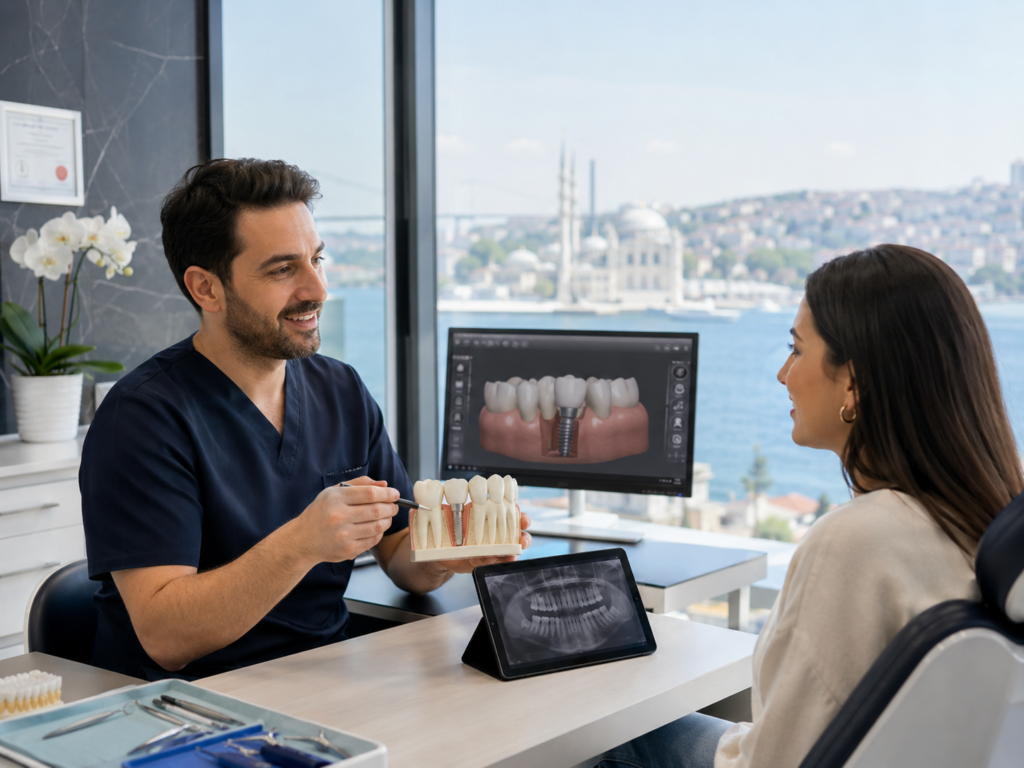
Choosing dental implants abroad is rarely just about the teeth. It is about timing, travel, cost, trust, and the question most patients ask first – how will this actually work from the moment I inquire to the moment I fly home? That is exactly where a dental implant journey guide helps. For international patients considering treatment in Istanbul, the process feels much easier when every step is clearly organized before you board the plane.
A well-managed implant experience should feel coordinated, not confusing. You should know what happens during the first consultation, what to expect after your scans, how many days you may need in the city, and why some cases are completed in phases instead of all at once. When patients understand the flow, they make better decisions and travel with far more confidence.
Why a dental implant journey guide matters
Dental implants are not a one-size-fits-all treatment. Some patients need a single implant after losing one tooth. Others arrive with multiple missing teeth, older dental work that has failed, or bone loss that changes the treatment plan. The journey can be short and simple, or it can involve extra planning, healing time, and a second visit.
That is why the right expectation matters as much as the procedure itself. A patient who expects instant final teeth in every case may be disappointed if grafting or healing is required. A patient who understands the sequence ahead of time usually feels calmer because there are fewer surprises.
For medical travelers, there is another layer. You are not only choosing a treatment. You are arranging flights, accommodation, local transportation, and communication in a different country. The value of a coordinated clinic experience is not only clinical. It is practical and emotional as well.
The first step: remote consultation and case review
Most international implant journeys begin remotely. Typically, you send photos, share your concerns, and explain what you want to improve. If you have panoramic X-rays or previous dental records, those can help the team assess your case before travel. This first stage is about screening, not making unrealistic promises.
A good case review gives you a realistic outline of what may be possible, what may need confirmation after scans in Istanbul, and whether your case looks suitable for implants at all. This is also the moment to discuss your goals. Are you replacing one missing tooth? Looking for full-mouth rehabilitation? Hoping to improve comfort after years with removable dentures? The answer changes the roadmap.
For many overseas patients, this early coordination is where anxiety starts to drop. Instead of trying to plan everything alone, you begin with a direct conversation and a clearer path.
What happens when you arrive in Istanbul
Once you land, the experience should move from online planning to structured in-person evaluation. This usually begins with transfers, hotel check-in, and your first clinic visit. For patients traveling for treatment, these details matter more than they may seem. If transport is unclear or appointments feel rushed, even a strong dental team can leave patients feeling unsettled.
At the clinic, your dentist or implant team will carry out a detailed examination. This often includes 3D imaging, oral assessment, and a closer look at bone quality, gum condition, and the position of nearby anatomical structures. This is the point where the provisional plan becomes a confirmed one.
Sometimes the original estimate stays almost exactly the same. Other times, the scans show a need for extractions, sinus lifting, bone grafting, or a staged approach. That is not a bad sign. It means the treatment plan is being based on your actual anatomy rather than guesswork from photos alone.
Understanding the treatment timeline
One of the most common questions in any dental implant journey guide is simple: how long will this take?
The answer depends on the case. A straightforward implant placement may be completed during one short treatment visit, followed by healing and a later return for the final crown. In more complex cases, teeth may need to be removed first, bone may need time to heal, or temporary teeth may be used before final restoration.
This is where honesty matters. Some patients are candidates for faster protocols. Others are not, and forcing speed can work against long-term success. Implant dentistry is partly about aesthetics, but it is also about stability and healing. The best timeline is not always the fastest one.
If you are traveling from the US or another country, ask practical questions early. How many days should you stay? Will you need a follow-up appointment before flying back? Is a second trip likely for the final prosthetic stage? Clear answers help you budget both time and expectations.
Procedure day: what patients usually experience
Implant placement is often less dramatic than patients imagine. Many expect severe pain or a very difficult procedure, but in routine cases the experience is more manageable than anticipated. Local anesthesia is commonly used, and depending on the plan, extractions or preparatory treatment may happen during the same period.
After the procedure, some swelling, mild bleeding, and soreness are normal. The first few days usually call for a softer diet, careful oral hygiene, and following medication instructions exactly as provided. If bone grafting or multiple implants are involved, recovery may feel more noticeable.
This is where coordination makes a visible difference. Patients feel more secure when they know who to contact, how their transfers are arranged, when their next check is scheduled, and what symptoms are normal versus worth reporting.
Healing is part of the treatment, not a delay
Many patients focus heavily on the surgery date and not enough on healing. Yet healing is where implants earn their long-term success. The implant needs time to integrate with the bone, and that process cannot be rushed simply because your return flight is booked.
A useful dental implant journey guide should make this clear: healing time is not dead time. It is an essential treatment phase. During this period, you may have temporary restorations, modified chewing instructions, and a follow-up plan for your return home and future visit.
It also depends on lifestyle factors. Smoking, uncontrolled gum disease, poor oral hygiene, and certain health conditions can affect outcomes. That does not automatically rule out treatment, but it may change how carefully the case must be managed. Good clinics discuss these trade-offs directly rather than brushing them aside.
The final restoration stage
Once healing has progressed well, the final crown, bridge, or full-arch prosthetic can be completed. This stage is where function and appearance come together. A successful implant result should not only look better in photos. It should also feel stable when you eat, speak, and smile.
The design of the final restoration depends on the number of implants, the bite, the aesthetic zone, and the condition of surrounding teeth. Some patients want the whitest possible look, while others want a result that blends naturally with existing teeth. Neither approach is wrong, but the plan should match your face, smile line, and expectations.
This is another reason why experienced coordination matters. The treatment is not finished when the implant is placed. The full journey includes planning, surgery, healing, and the restorative finish.
Travel support changes the experience
For international patients, convenience is not a luxury. It is part of good treatment management. When appointments, hotel stay, airport transfers, and communication support are handled in an organized way, the patient can focus on recovery rather than logistics.
That is one reason many people choose Istanbul for dentistry. The city offers strong value, but value alone is not enough. Patients also want to feel looked after. A service model that combines treatment coordination with hospitality support can make the process feel much more accessible, especially for first-time medical travelers.
At Chic Clinic Istanbul, this guided approach is a big part of what patients appreciate. Instead of managing every moving part alone, they have a clearer route from WhatsApp consultation to arrival, treatment, and follow-up.
Tips for a Successful Dental Implant Journey in Turkey
A successful dental implant journey in Turkey starts with careful planning and realistic expectations. Choose a clinic that reviews your case before travel, provides a clear treatment plan, and explains whether you may need one or more visits. Share your medical history and dental records accurately, and ask how long you should stay in Istanbul after treatment.
It is also important to plan enough time for healing and follow your dentist’s aftercare instructions carefully. Avoid choosing a treatment based only on price or speed. Implant treatment should be planned around your bone condition, oral health, and individual needs, with appropriate follow-up after you return home.
How to prepare before you travel
The smoother your preparation, the easier your treatment week tends to be. Share accurate medical information, send clear photos or scans when requested, and ask upfront whether your case is likely to need one visit or two. If you take medications or have chronic health conditions, mention them early.
It also helps to prepare mentally for flexibility. Even with excellent remote planning, final decisions may change slightly after in-person imaging. That does not mean the plan failed. It means your team is making decisions based on the most reliable information.
Bring comfortable clothing, allow time for rest after appointments, and avoid building a packed sightseeing schedule around treatment days. Istanbul is an exciting destination, but implant recovery is still recovery.
The best dental travel experiences are rarely the ones that promise everything instantly. They are the ones that feel structured, transparent, and well supported from start to finish. If you choose your provider carefully and understand the stages ahead, dental implants in Istanbul can feel less like a leap and more like a well-planned next step.